Ocmulgee National Monument

Why it's listed
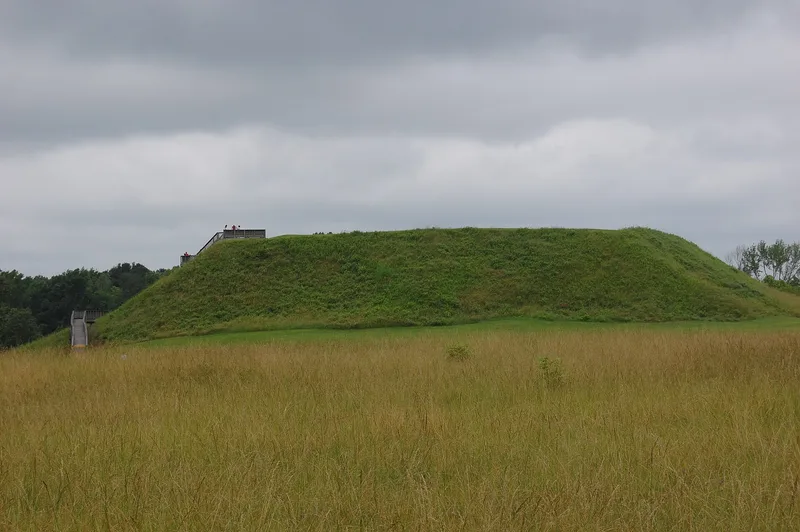
Ocmulgee National Monument preserves a large archeological landscape on a bluff above the Ocmulgee River, east of Macon, Georgia. Seven rectangular Mississippian-period mounds form its core, joined by a separate Lamar area with two later mounds. Excavations in the 1930s recovered over a million pottery and flint artifacts and revealed a sequence of six prehistoric levels of occupation. An earthlodge with a restored clay floor dates to about A.D. 1015. The site also holds the outline of a colonial trading post occupied from roughly 1690 to 1715, the 1856 Dunlap house, and an earthwork tied to the 1864 Stoneman raid on Macon. A 1938 Art Moderne visitor center, decorated with a frieze copied from Lamar pottery, serves as museum, offices and research storage. Smithsonian specialists considered the complex among the most important archeological centers east of the Appalachians, which underlies its protection.
Machine-generated summary. This summary was generated by a language model from the official nomination document and has not been reviewed line by line by an editor. It may contain errors. Check the source document before relying on any detail. Source: nomination document (PDF) · catalog entry. Generated October 2026 (model claude-sonnet-5-5, prompt v1.0-2026-10-29).
| Styles | Art Moderne (Visitor Center); ante-bellum frame farmhouse (Dunlap House) |
|---|---|
| Areas of significance | Architecture, Historic - Aboriginal, Social History, Religion, Prehistoric, Science, Art |
| Acreage | 702.1 |
| Boundary source | NPS cultural-resource GIS polygon |
| Full listing page | Ocmulgee National Monument (property record) |
What listing means for this property
This is a historic district. Buildings within its boundary are either contributing (they add to the district's significance) or non-contributing. Owners of contributing income-producing buildings can claim the 20% federal rehabilitation tax credit; homeowners should look at state credits. National Register districts impose no design review by themselves; a local historic district ordinance, if one exists, does (the difference explained).
General information, not legal or tax advice. Rules change; confirm with your State Historic Preservation Office or a qualified adviser.