Northwest Newnan Residential Historic District

Why it's listed
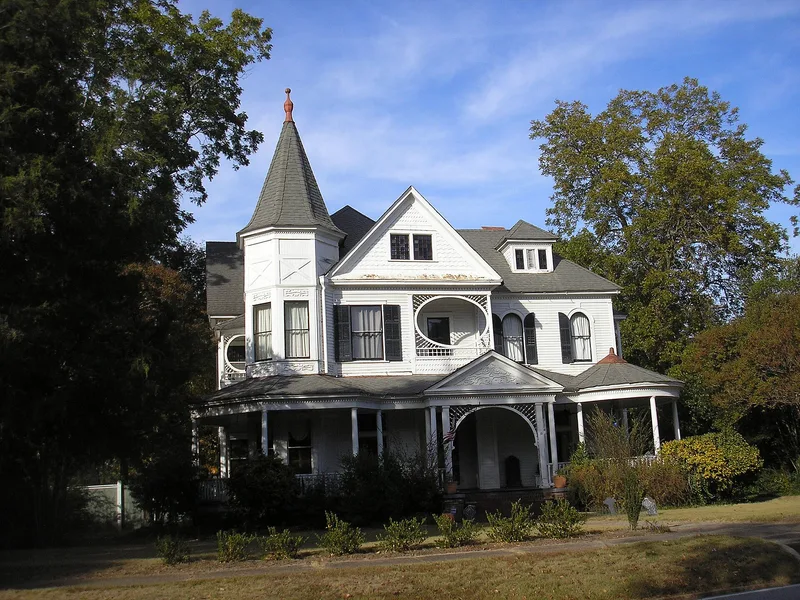
Northwest Newnan is a residential neighborhood of about 125 acres west and north of the courthouse square in Newnan, Georgia. Its tree-lined streets hold mostly wood-frame, middle- and upper-middle-class houses, along with a Gothic Revival Baptist church, a 1935 school, a hospital, two parks and the 1885 Male Seminary building, which was returned to its original site in 1975. Part of the area lay within the town limits when Newnan was incorporated in 1828, and it grew through several periods of settlement, railroad-era expansion and early-twentieth-century prosperity. The houses show about a century of changing styles, from Greek Revival and Victorian to Prairie, Neoclassical, Bungalow and Art Deco. Much of the decorative sawnwork came from the local R. D. Cole woodworking shop, which operated from 1854 to 1960. Atlanta architect R. Kinnon Perry designed the 1925 Newnan Hospital and many residences. The district was listed for its architecture, planning, education, religion and local history.
Machine-generated summary. This summary was generated by a language model from the official nomination document and has not been reviewed line by line by an editor. It may contain errors. Check the source document before relying on any detail. Source: nomination document (PDF) · catalog entry. Generated October 2026 (model claude-sonnet-5-5, prompt v1.0-2026-10-29).
| Period of significance | 1820s - early 20th century |
|---|---|
| Styles | Greek Revival, Plantation Plain, Victorian (Carpenter Gothic, Eastlake, Queen Anne), Prairie, Neoclassical, Neo-Georgian, Bungalow/Craftsman, Art Deco |
| Areas of significance | Community Planning and Development, Landscape Architecture, Education, Exploration/Settlement, Architecture, Social History |
| Acreage | 125 |
| Boundary source | NPS cultural-resource GIS polygon |
| Full listing page | Northwest Newnan Residential Historic District (property record) |
What listing means for this property
This is a historic district. Buildings within its boundary are either contributing (they add to the district's significance) or non-contributing. Owners of contributing income-producing buildings can claim the 20% federal rehabilitation tax credit; homeowners should look at state credits. National Register districts impose no design review by themselves; a local historic district ordinance, if one exists, does (the difference explained).
General information, not legal or tax advice. Rules change; confirm with your State Historic Preservation Office or a qualified adviser.