Myrtle Hill Cemetery

Why it's listed
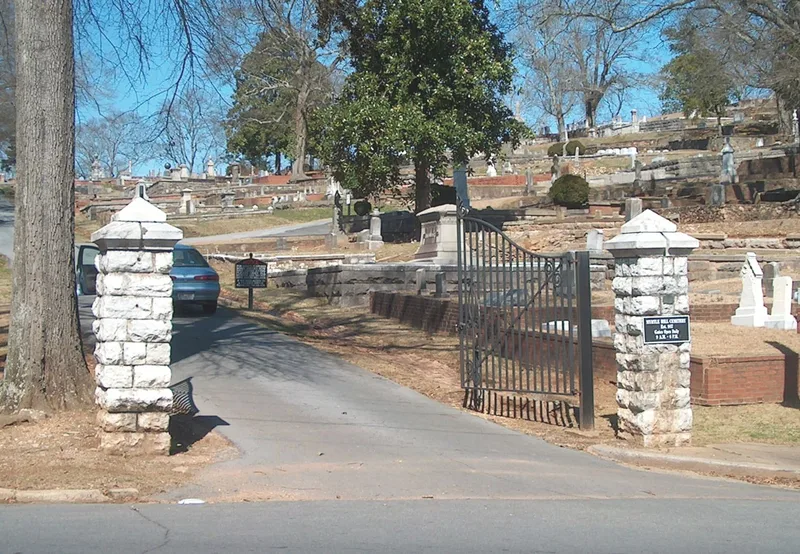
Myrtle Hill Cemetery occupies a steep hillside in South Rome, Georgia, near the point where the Etowah and Oostanaula Rivers meet to form the Coosa. The City of Rome bought the land in the early 1850s to replace Oak Hill, the original cemetery, which had become too small as the town grew. Colonel C.M. Pennington designed about half of the present cemetery in the picturesque rural style, with curving drives, stone terracing and informal landscaping. Later additions followed his approach, so the grounds look unified. Iron fences, many made locally by the Noble and McCoullough Foundry, and a long flight of steps at the east entrance add to the park-like setting. Seven marble vaults built between 1891 and 1940, most by the McNeel Marble Company of Marietta, represent typical funerary architecture. The cemetery also includes a large Confederate section and areas for paupers and Black residents. It was listed for community planning, landscape architecture and architecture.
Machine-generated summary. This summary was generated by a language model from the official nomination document and has not been reviewed line by line by an editor. It may contain errors. Check the source document before relying on any detail. Source: nomination document (PDF) · catalog entry. Generated October 2026 (model claude-sonnet-5-5, prompt v1.0-2026-10-29).
| Period of significance | 1850s to present |
|---|---|
| Areas of significance | Community Planning and Development, Landscape Architecture, Architecture |
| Acreage | 22 |
| Boundary source | NPS cultural-resource GIS polygon |
| Full listing page | Myrtle Hill Cemetery (property record) |
What listing means for this property
This is a historic district. Buildings within its boundary are either contributing (they add to the district's significance) or non-contributing. Owners of contributing income-producing buildings can claim the 20% federal rehabilitation tax credit; homeowners should look at state credits. National Register districts impose no design review by themselves; a local historic district ordinance, if one exists, does (the difference explained).
General information, not legal or tax advice. Rules change; confirm with your State Historic Preservation Office or a qualified adviser.