Milledgeville Historic District

Why it's listed
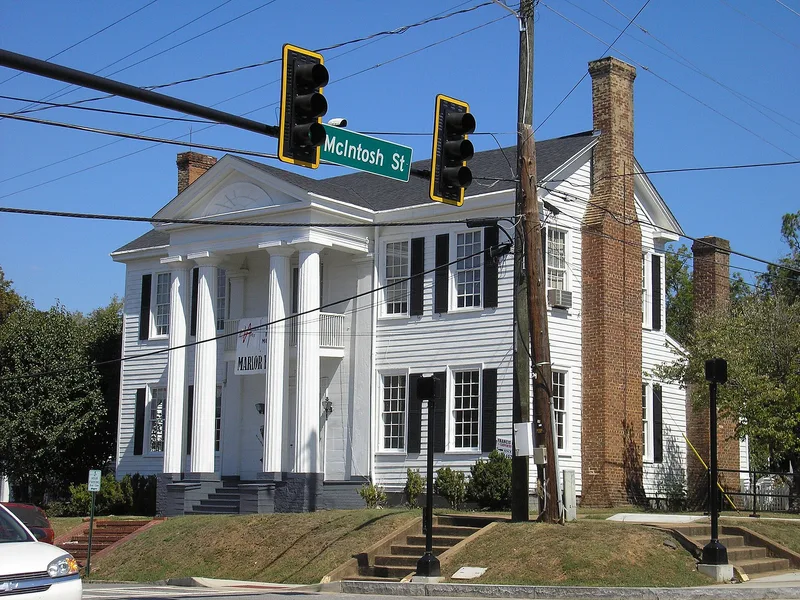
Milledgeville's historic district covers essentially the area laid out in 1803 as the planned capital of Georgia, on a bluff at the head of navigation of the Oconee River. The state legislature designated the city the capital in 1804, and it held that role until 1868. The grid of 100-foot streets and four Savannah-style squares, set aside for a state house, a governor's residence, a penitentiary and a cemetery, still survives. Buildings include the reconstructed Gothic Revival State House, now part of Georgia Military College, and the 1838 Classical Revival Governor's Mansion. Atkinson Hall stands on the former Penitentiary Square, now a college campus. Federal-period houses such as the Cedars and the Ferguson House remain little altered, and Victorian structures such as the Old Opera House add variety. Sherman occupied the city in 1864 without destroying it. The listing was sought to protect the plan and its buildings from growing development pressure.
Machine-generated summary. This summary was generated by a language model from the official nomination document and has not been reviewed line by line by an editor. It may contain errors. Check the source document before relying on any detail. Source: nomination document (PDF) · catalog entry. Generated October 2026 (model claude-sonnet-5-5, prompt v1.0-2026-10-29).
| Styles | Federal, Classical Revival, Gothic Revival and Victorian, with every major architectural type and style represented |
|---|---|
| Areas of significance | Community Planning and Development, Commerce, Military, Education, Politics/Government, Architecture |
| Acreage | 3240 |
| Boundary source | NPS cultural-resource GIS polygon |
| Full listing page | Milledgeville Historic District (property record) |
What listing means for this property
This is a historic district. Buildings within its boundary are either contributing (they add to the district's significance) or non-contributing. Owners of contributing income-producing buildings can claim the 20% federal rehabilitation tax credit; homeowners should look at state credits. National Register districts impose no design review by themselves; a local historic district ordinance, if one exists, does (the difference explained).
General information, not legal or tax advice. Rules change; confirm with your State Historic Preservation Office or a qualified adviser.