McDaniel-Huie Place

The National Park Service has not published a boundary polygon for this district; the map shows the listed properties inside it and the district's reference point.
Why it's listed
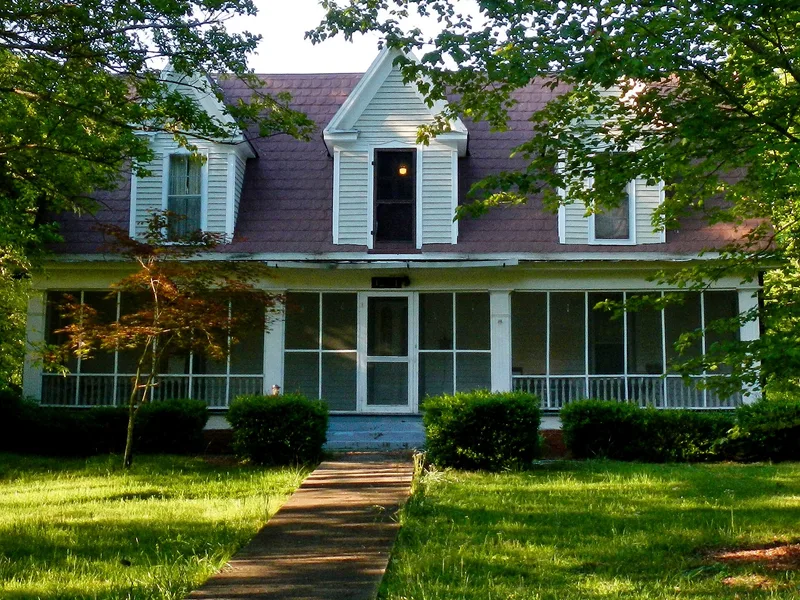
McDaniel-Huie Place is a farmstead on the western edge of Bowdon, Georgia, centered on a one-and-one-half story frame house built over the site of an earlier dog-trot cabin and completed by 1890. The house follows the traditional central-hall plan with Victorian Gothic Revival touches, including triple cross-gabled dormers, shallow pediments over openings and patterned brick chimneys. Around it stand numerous heavy-timber outbuildings dating from roughly 1852 to 1880, among them a smokehouse, mule barn, corn crib, blacksmith shop and carriage house, along with a spring. Together they show the many specialized buildings a mid-nineteenth-century farm needed. J. B. McDaniel, an early settler and prosperous farmer, served in the Georgia House and Senate during the Civil War years. Later owner D. B. Huie helped finance the Farmer's Alliance Store, a farmers' cooperative linked to the Populist movement. The property was listed for its agricultural, architectural and political associations.
Machine-generated summary. This summary was generated by a language model from the official nomination document and has not been reviewed line by line by an editor. It may contain errors. Check the source document before relying on any detail. Source: nomination document (PDF) · catalog entry. Generated October 2026 (model claude-sonnet-5-5, prompt v1.0-2026-10-29).
| Period of significance | 1852-1940 |
|---|---|
| Styles | Gothic Revival (vernacular Victorian Gothic Revival) |
| Areas of significance | Agriculture, Politics/Government, Architecture |
| Acreage | 6 |
| Boundary source | not published |
| Full listing page | McDaniel-Huie Place (property record) |
What listing means for this property
This is a historic district. Buildings within its boundary are either contributing (they add to the district's significance) or non-contributing. Owners of contributing income-producing buildings can claim the 20% federal rehabilitation tax credit; homeowners should look at state credits. National Register districts impose no design review by themselves; a local historic district ordinance, if one exists, does (the difference explained).
General information, not legal or tax advice. Rules change; confirm with your State Historic Preservation Office or a qualified adviser.