Mathews, John Frank, Plantation

Why it's listed
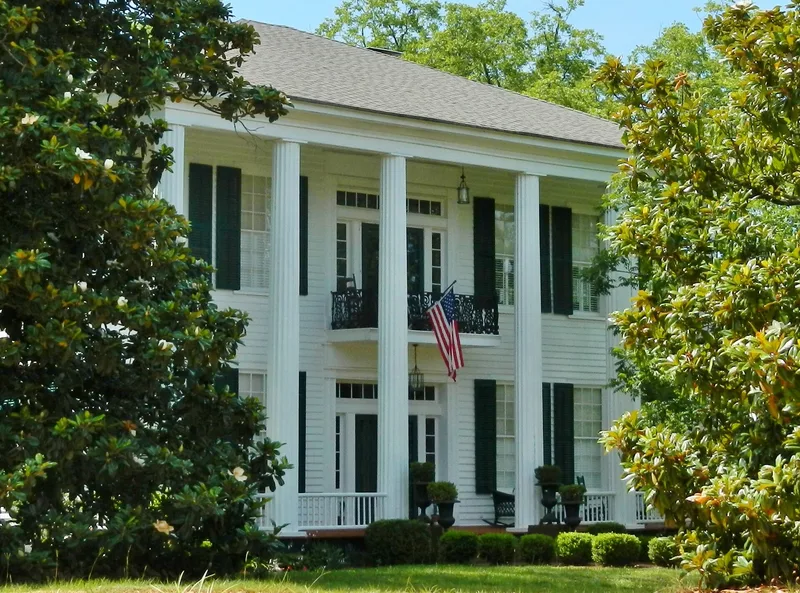
Located along U.S. 80 in Prattsburg, Talbot County, Georgia, this plantation district centers on a two-story frame main house built in 1859-1860 for cotton planter John Frank Mathews. Local carpenter James D. Cottingham served as builder, and his signed plans survive, the only ones known for a Georgia antebellum plantation house. The Greek Revival house follows a four-over-four plan with a central hall and keeps its original siding, columns, balconies, mantels, stairs, and shutters. Surrounding it are a detached kitchen, smokehouse, privy, barn, corn crib, family cemetery, tenant house, blacksmith shop, and an old store and gas station. In a nearby pine forest lie the ruins of an industrial complex that included a cotton gin, grist mill, sawmill, planing mill, and dipping vat serving a wide area. In 1859-1860 the plantation produced over 106 bales of cotton. The property was listed for its architecture, its ties to Georgia's cotton economy, and its archaeological potential.
Machine-generated summary. This summary was generated by a language model from the official nomination document and has not been reviewed line by line by an editor. It may contain errors. Check the source document before relying on any detail. Source: nomination document (PDF) · catalog entry. Generated October 2026 (model claude-sonnet-5-5, prompt v1.0-2026-10-29).
| Period of significance | 1800-1899 |
|---|---|
| Styles | Greek Revival |
| Areas of significance | Industry, Agriculture, Historic - Non-Aboriginal, Architecture |
| Acreage | 55 |
| Boundary source | NPS cultural-resource GIS polygon |
| Full listing page | Mathews, John Frank, Plantation (property record) |
What listing means for this property
This is a historic district. Buildings within its boundary are either contributing (they add to the district's significance) or non-contributing. Owners of contributing income-producing buildings can claim the 20% federal rehabilitation tax credit; homeowners should look at state credits. National Register districts impose no design review by themselves; a local historic district ordinance, if one exists, does (the difference explained).
General information, not legal or tax advice. Rules change; confirm with your State Historic Preservation Office or a qualified adviser.