Lincolnton Historic District

Why it's listed
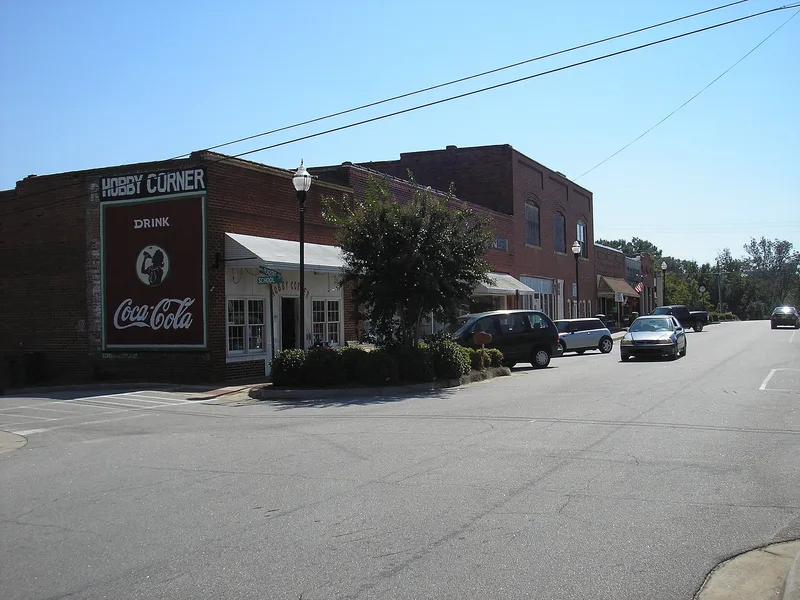
Lincolnton's historic district preserves the core of a small Georgia county seat that grew around a spring and a crossroads. It includes the commercial center, scattered residential streets, and civic and religious landmarks, with 133 contributing resources. Three antebellum survivors remain, including the 1823 Union Church and the early 1820s Lamar-Blanchard House, a former tavern. Most buildings date from the early twentieth century, when the town saw its greatest growth. They include the 1915 Neoclassical Revival courthouse designed by G. L. Preacher, Methodist and Baptist churches, a 1941 Streamline Moderne hotel, a 1930s gas station, and a 1911 Sears, Roebuck mail-order house. A 1935 Women's Club building was a Works Progress Administration project. The district was recognized for its architecture, its commercial history, and its irregular crossroads plan, which shows slow, dispersed growth rather than a planned courthouse-square layout. Its period of significance spans 1796 to 1942.
Machine-generated summary. This summary was generated by a language model from the official nomination document and has not been reviewed line by line by an editor. It may contain errors. Check the source document before relying on any detail. Source: nomination document (PDF) · catalog entry. Generated October 2026 (model claude-sonnet-5-5, prompt v1.0-2026-10-29).
| Period of significance | 1796 - 1942 |
|---|---|
| Styles | Queen Anne, Neoclassical Revival, Tudor Revival, Bungalow/Craftsman, Streamlined Moderne, Stripped Classical, Folk Victorian |
| Areas of significance | Community Planning and Development, Commerce, Politics/Government, Architecture |
| Acreage | 280 |
| Boundary source | NPS cultural-resource GIS polygon |
| Full listing page | Lincolnton Historic District (property record) |
What listing means for this property
This is a historic district. Buildings within its boundary are either contributing (they add to the district's significance) or non-contributing. Owners of contributing income-producing buildings can claim the 20% federal rehabilitation tax credit; homeowners should look at state credits. National Register districts impose no design review by themselves; a local historic district ordinance, if one exists, does (the difference explained).
General information, not legal or tax advice. Rules change; confirm with your State Historic Preservation Office or a qualified adviser.