Inman Park

Why it's listed
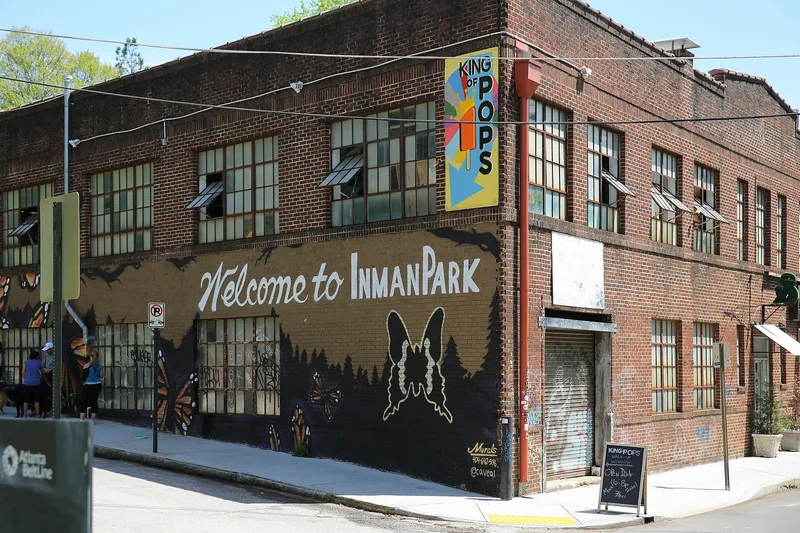
Inman Park is a residential neighborhood near the eastern edge of Atlanta, connected to the downtown Five Points area by Edgewood Avenue. Developed from 1889 by Joel Hurt's East Atlanta Land Company, it was the city's first planned residential suburb. Hurt tied it to an electric street railway and a downtown skyscraper, the Equitable Building. Curving streets, rolling terrain, large shade trees and green spaces such as Springvale Park, the Triangle and the Delta give the area a picturesque character. Its houses range from High Victorian Queen Anne and Colonial Revival designs to Jacobethan and Beaux-Arts examples, plus a c. 1890 shingle style car barn and the Inman Park School by G. L. Norrman. Prominent Atlantans, including members of the Candler family, lived here. After deed restrictions lapsed in 1910, apartments and businesses appeared, and many families moved away. A restoration movement began around 1970, and a 1961 road embankment cut through Springvale Park.
Machine-generated summary. This summary was generated by a language model from the official nomination document and has not been reviewed line by line by an editor. It may contain errors. Check the source document before relying on any detail. Source: nomination document (PDF) · catalog entry. Generated October 2026 (model claude-sonnet-5-5, prompt v1.0-2026-10-29).
| Period of significance | 1890 - 1973 |
|---|---|
| Styles | High Victorian Queen Anne, Colonial Revival, Jacobethan Revival, Beaux-Arts classical, Prairie School influence, shingle style, and early twentieth century bungalows |
| Areas of significance | Community Planning and Development, Landscape Architecture, Architecture |
| Acreage | 180 |
| Boundary source | NPS cultural-resource GIS polygon |
| Full listing page | Inman Park (property record) |
What listing means for this property
This is a historic district. Buildings within its boundary are either contributing (they add to the district's significance) or non-contributing. Owners of contributing income-producing buildings can claim the 20% federal rehabilitation tax credit; homeowners should look at state credits. National Register districts impose no design review by themselves; a local historic district ordinance, if one exists, does (the difference explained).
General information, not legal or tax advice. Rules change; confirm with your State Historic Preservation Office or a qualified adviser.