Hillcrest-Wildwood Circle Historic District

Why it's listed
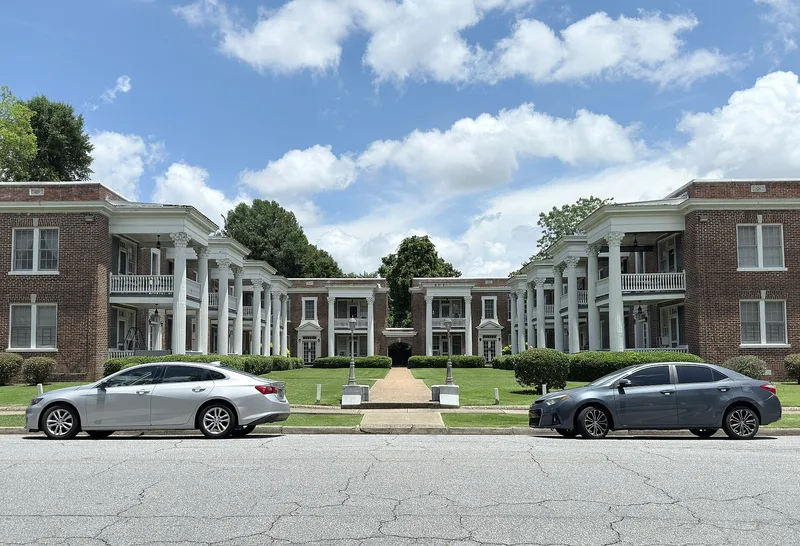
Hillcrest-Wildwood Circle is a residential neighborhood east of downtown Columbus, Georgia, in the area once known as Wynnton. It developed in the early twentieth century from the estate of John F. Flournoy, a Columbus real estate developer. His 1890 house, Hillcrest, sits on the highest hill in Wynnton. Architect L. E. Thornton designed it in the Queen Anne-Eastlake style, and it is described as the only monumental high-style Queen Anne house left in Columbus. Flournoy's children built homes around it from about 1906, and later subdivided the grounds into lots filled with houses by the early 1950s. His company laid out the Wildwood Circle subdivision in 1911. The district contains Georgian and English cottages, bungalows, Colonial Revival, Spanish Revival and ranch houses, plus several apartment buildings. At its southeast corner lies the site of the antebellum Hilton house, which burned in 1983 but has remaining foundations and old trees, and which may hold archaeological evidence.
Machine-generated summary. This summary was generated by a language model from the official nomination document and has not been reviewed line by line by an editor. It may contain errors. Check the source document before relying on any detail. Source: nomination document (PDF) · catalog entry. Generated October 2026 (model claude-sonnet-5-5, prompt v1.0-2026-10-29).
| Styles | Queen Anne, Colonial Revival, Tudor Revival, Mission/Spanish Colonial Revival, Bungalow/Craftsman, Moderne, Ranch |
|---|---|
| Areas of significance | Architecture, Community Planning and Development, Literature |
| Acreage | 68 |
| Boundary source | NPS cultural-resource GIS polygon |
| Full listing page | Hillcrest-Wildwood Circle Historic District (property record) |
What listing means for this property
This is a historic district. Buildings within its boundary are either contributing (they add to the district's significance) or non-contributing. Owners of contributing income-producing buildings can claim the 20% federal rehabilitation tax credit; homeowners should look at state credits. National Register districts impose no design review by themselves; a local historic district ordinance, if one exists, does (the difference explained).
General information, not legal or tax advice. Rules change; confirm with your State Historic Preservation Office or a qualified adviser.