Greyfield

Why it's listed
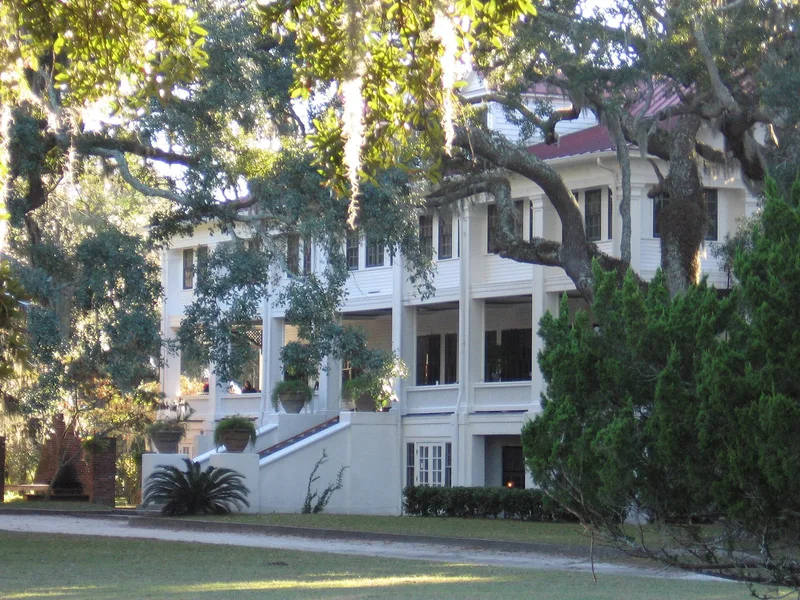
Greyfield is a 200-acre estate on the western side of Cumberland Island, Georgia, running from Cumberland Sound to the Atlantic Ocean. Its main house, begun in 1901 and said to be finished in 1905, was built for Margaret Carnegie Ricketson and her husband Oliver as a seasonal home. The Pittsburgh firm MacClure and Spahr designed it in a Colonial Revival style, with a full-length front porch, monumental square columns, dormers, and weatherboard front and back with stuccoed ends. Inside, heart pine floors, paneling, plaster walls, and original mantels survive. The estate also keeps a barn, four cottages, entry gates, a pergola, a pond, and the foundations of a water tower. It is one of several homes built by the Carnegie family on the island and shows how wealthy Northern industrialists used the Georgia coast for winter recreation. Descendants of the Ricketsons have kept it in family hands, and it has operated as an inn since 1962.
Machine-generated summary. This summary was generated by a language model from the official nomination document and has not been reviewed line by line by an editor. It may contain errors. Check the source document before relying on any detail. Source: nomination document (PDF) · catalog entry. Generated October 2026 (model claude-sonnet-5-5, prompt v1.0-2026-10-29).
| Period of significance | 1901-1962 |
|---|---|
| Styles | Late 19th and Early 20th Century Revivals/Colonial Revival |
| Areas of significance | Architecture, Entertainment/Recreation, Social History |
| Acreage | 203 |
| Boundary source | NPS cultural-resource GIS polygon |
| Full listing page | Greyfield (property record) |
What listing means for this property
This is a historic district. Buildings within its boundary are either contributing (they add to the district's significance) or non-contributing. Owners of contributing income-producing buildings can claim the 20% federal rehabilitation tax credit; homeowners should look at state credits. National Register districts impose no design review by themselves; a local historic district ordinance, if one exists, does (the difference explained).
General information, not legal or tax advice. Rules change; confirm with your State Historic Preservation Office or a qualified adviser.