Greenwood Plantation

Why it's listed
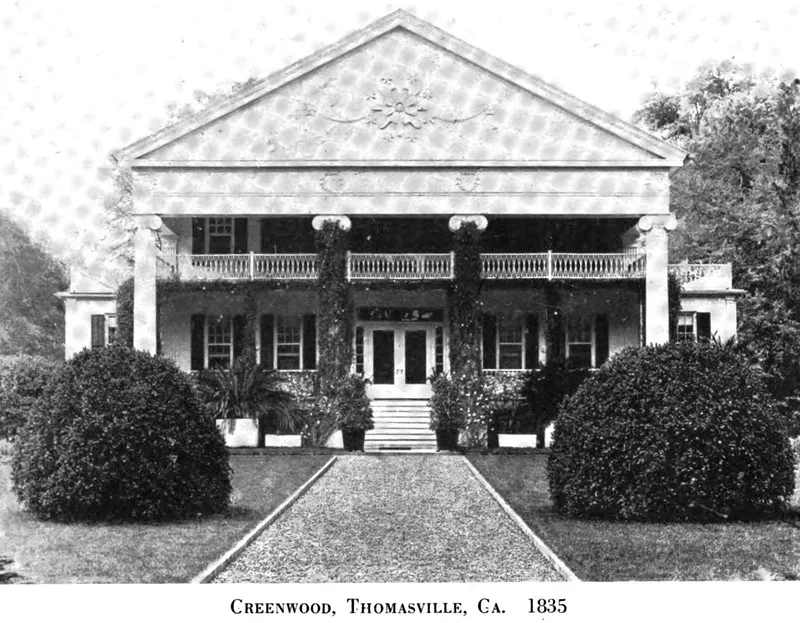
Greenwood Plantation is a large estate outside Thomasville, Georgia, organized around a two-story brick and frame Greek Revival mansion. Thomas P. Jones began the plantation in 1827 and built the house between 1835 and 1844 using bricks fired and timbers cut on the property. English architect John Wind designed it, and its pedimented portico carries hand-carved ornament. In the early 20th century, Colonel Oliver Hazard Payne commissioned Stanford White to add wings, rear additions, bronze gates and sunken gardens. The nominated home-place tract also includes outbuildings, the Jones family cemetery, Pine Tree Boulevard and a stand of virgin longleaf pine. The property was listed for its architecture, its role in southern agriculture from rice and sharecropping to hybrid corn seed development, its quail hunting and conservation programs, and its ownership by the Payne and Whitney families, who were prominent in finance, politics, the arts and philanthropy.
Machine-generated summary. This summary was generated by a language model from the official nomination document and has not been reviewed line by line by an editor. It may contain errors. Check the source document before relying on any detail. Source: nomination document (PDF) · catalog entry. Generated October 2026 (model claude-sonnet-5-5, prompt v1.0-2026-10-29).
| Period of significance | 1900- (plantation begun 1827; main house built 1835-44) |
|---|---|
| Styles | Greek Revival |
| Areas of significance | Landscape Architecture, Economics, Architecture, Social History, Agriculture |
| Acreage | 1400 |
| Boundary source | NPS cultural-resource GIS polygon |
| Full listing page | Greenwood Plantation (property record) |
What listing means for this property
This is a historic district. Buildings within its boundary are either contributing (they add to the district's significance) or non-contributing. Owners of contributing income-producing buildings can claim the 20% federal rehabilitation tax credit; homeowners should look at state credits. National Register districts impose no design review by themselves; a local historic district ordinance, if one exists, does (the difference explained).
General information, not legal or tax advice. Rules change; confirm with your State Historic Preservation Office or a qualified adviser.