Grant Park Historic District

Why it's listed
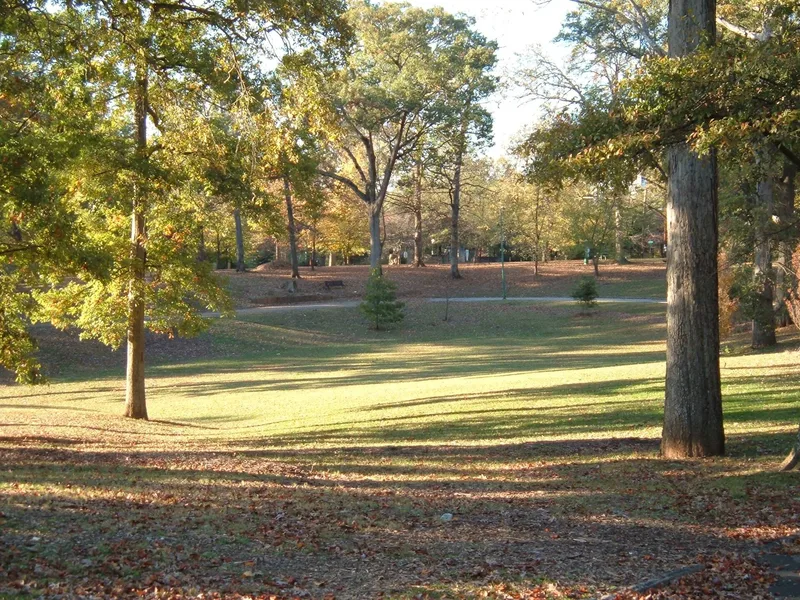
Grant Park Historic District covers about 430 acres of rolling terrain in southeast Atlanta, centered on a 131-acre city park. Most of its roughly 1,100 structures are houses from the late nineteenth and early twentieth centuries, including two-story Queen Anne frame dwellings, one-story Victorian cottages, Craftsman bungalows and larger Neo-Classical mansions facing the park. Brick-paved sidewalks, old street trees and stone retaining walls add to the setting. Schools such as Roosevelt High School, churches and small commercial clusters also serve the neighborhood. The district is tied to Colonel Lemuel P. Grant, a railroad builder who designed Atlanta's Civil War fortifications and gave land for the park in 1883. The park holds the remains of Fort Walker and the Cyclorama painting of the Battle of Atlanta, and the Olmsted brothers prepared design changes there in the early 1900s. Few intrusions disturb the historic character.
Machine-generated summary. This summary was generated by a language model from the official nomination document and has not been reviewed line by line by an editor. It may contain errors. Check the source document before relying on any detail. Source: nomination document (PDF) · catalog entry. Generated October 2026 (model claude-sonnet-5-5, prompt v1.0-2026-10-29).
| Period of significance | 1858 - date (checked periods 1800-1899 and 1900-) |
|---|---|
| Styles | Late Victorian styles (Queen Anne, Italianate, Neo-Classical), Craftsman bungalows, Classical Revival, Neo-Byzantine Revival, Gothic Revival |
| Areas of significance | Community Planning and Development, Landscape Architecture, Historic - Non-Aboriginal, Military, Architecture |
| Acreage | 430 |
| Boundary source | NPS cultural-resource GIS polygon |
| Full listing page | Grant Park Historic District (property record) |
What listing means for this property
This is a historic district. Buildings within its boundary are either contributing (they add to the district's significance) or non-contributing. Owners of contributing income-producing buildings can claim the 20% federal rehabilitation tax credit; homeowners should look at state credits. National Register districts impose no design review by themselves; a local historic district ordinance, if one exists, does (the difference explained).
General information, not legal or tax advice. Rules change; confirm with your State Historic Preservation Office or a qualified adviser.