Georgia Institute of Technology Historic District

Why it's listed
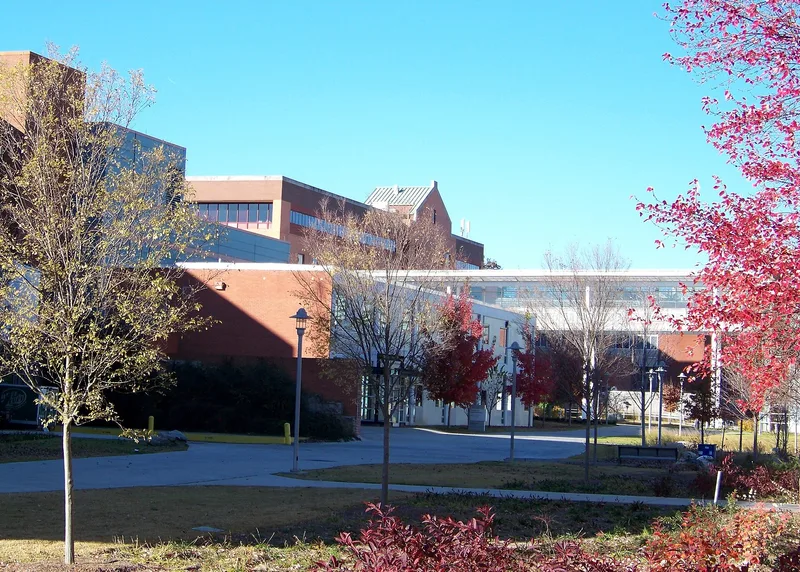
Georgia Tech's old campus sits on the crest of "the Hill" in Atlanta, a landscaped cluster of twelve red brick classroom, laboratory and administrative buildings. The Administration Building of 1888, designed by Bruce and Morgan, anchors the group with its seven-story tower and lighted "TECH" letters, a city landmark. Around it stand the Carnegie Building (1906-07), the first library; Lyman Hall Laboratory of Chemistry (1905); the A. French Building (1898), built for textile engineering; the Whitehead Infirmary (1910); the D. M. Smith Building (1922-23); and the Emerson Laboratory (1925). Most date from 1885 to 1923 and share a consistent approach to design and construction, yet vary in style from Romanesque to Beaux-Arts to Collegiate-Gothic. Their loose siting creates enclosed, intimate spaces beneath mature trees. Many were funded by donors, and together they trace the school's growth from a small trade school into a major engineering institution. The buildings remain in educational use.
Machine-generated summary. This summary was generated by a language model from the official nomination document and has not been reviewed line by line by an editor. It may contain errors. Check the source document before relying on any detail. Source: nomination document (PDF) · catalog entry. Generated October 2026 (model claude-sonnet-5-5, prompt v1.0-2026-10-29).
| Styles | Mixed-period buildings including neo-Romanesque Victorian, Beaux-Arts Classical, Jacobethan Revival, Georgian variant and Collegiate-Gothic |
|---|---|
| Areas of significance | Landscape Architecture, Engineering, Education, Science, Architecture |
| Acreage | 10 |
| Boundary source | NPS cultural-resource GIS polygon |
| Full listing page | Georgia Institute of Technology Historic District (property record) |
What listing means for this property
This is a historic district. Buildings within its boundary are either contributing (they add to the district's significance) or non-contributing. Owners of contributing income-producing buildings can claim the 20% federal rehabilitation tax credit; homeowners should look at state credits. National Register districts impose no design review by themselves; a local historic district ordinance, if one exists, does (the difference explained).
General information, not legal or tax advice. Rules change; confirm with your State Historic Preservation Office or a qualified adviser.