Fort Valley Downtown and Railroad Historic District

Why it's listed
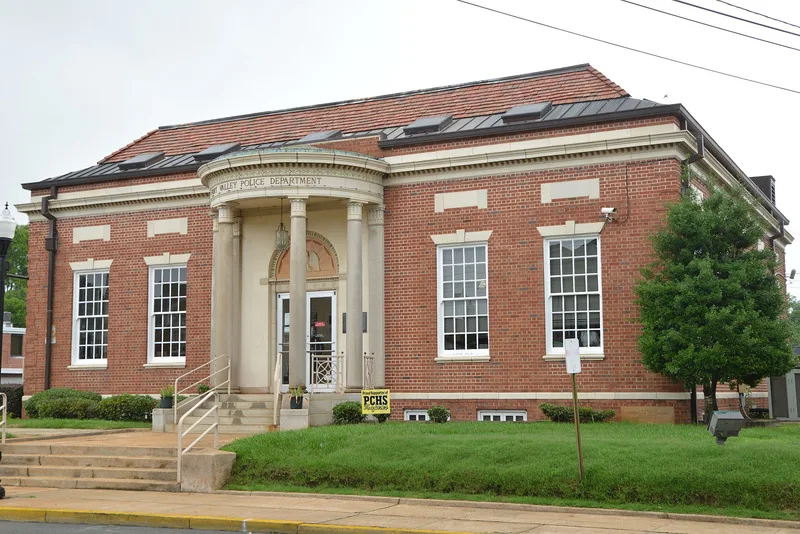
Fort Valley's downtown and railroad district forms the center of a Georgia railroad town that is also the Peach County seat. The district includes 60 contributing resources, mostly built between the late 1860s and the 1950s. The tracks, completed in 1851, anchor the east side, where a freight depot (c.1871), a passenger depot (c.1906) and an interlocking tower (c.1906) stand beside industrial buildings such as the Anthoine Machine Works and a former peach cull building. To the west, one- to three-story brick commercial buildings line Main and Church Streets in a continuous wall of storefronts. Government landmarks include the 1936 Colonial Revival Peach County Courthouse by Dennis & Dennis, a 1930s former post office, a former jail and a c.1950 city hall. Three nineteenth-century houses with railroad ties stand east of the tracks. Together these resources show how the railroad and the peach trade shaped the town's layout and commerce from the late 1800s through the 1940s.
Machine-generated summary. This summary was generated by a language model from the official nomination document and has not been reviewed line by line by an editor. It may contain errors. Check the source document before relying on any detail. Source: nomination document (PDF) · catalog entry. Generated October 2026 (model claude-sonnet-5-5, prompt v1.0-2026-10-29).
| Period of significance | Extends to 1960 (start date not stated in the excerpt) |
|---|---|
| Styles | Greek Revival, Italianate, Queen Anne, Romanesque, Colonial Revival, Classical Revival, Mission/Spanish Colonial Revival, Commercial Style, Moderne |
| Areas of significance | Architecture, Commerce, Community Planning and Development, Politics/Government, Transportation |
| Acreage | 52 |
| Boundary source | NPS cultural-resource GIS polygon |
| Full listing page | Fort Valley Downtown and Railroad Historic District (property record) |
What listing means for this property
This is a historic district. Buildings within its boundary are either contributing (they add to the district's significance) or non-contributing. Owners of contributing income-producing buildings can claim the 20% federal rehabilitation tax credit; homeowners should look at state credits. National Register districts impose no design review by themselves; a local historic district ordinance, if one exists, does (the difference explained).
General information, not legal or tax advice. Rules change; confirm with your State Historic Preservation Office or a qualified adviser.