Fairway Oaks-Greenview Historic District

Why it's listed
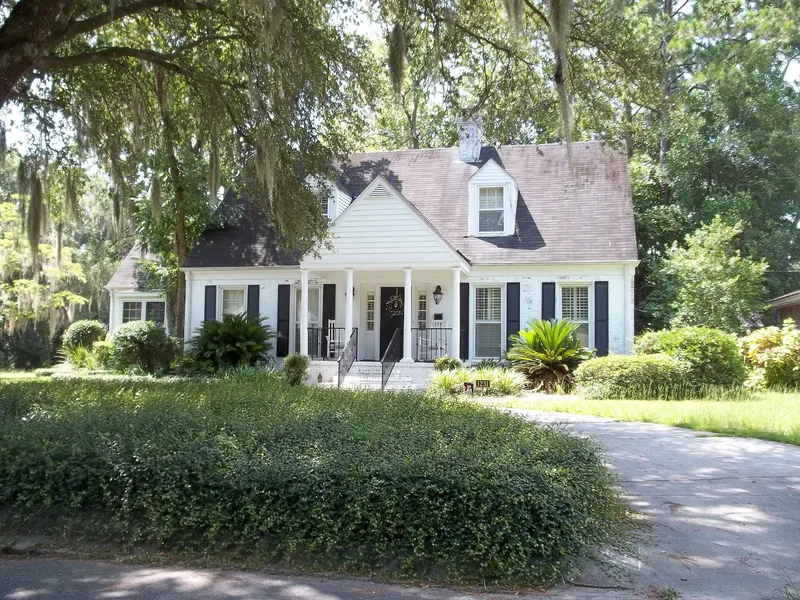
Fairway Oaks-Greenview is a suburban neighborhood about three miles southwest of downtown Savannah, formed by two connected subdivisions built between 1950 and the early 1960s beside the Bacon Park golf course. Fairway Oaks, laid out by Max Hostetter and James Richmond, broke from Savannah's traditional grid with curving streets, cul-de-sacs and wooded lots of varied shapes. Greenview, begun in 1956, added larger and more elaborate houses, several by Savannah architects. The district holds 207 contributing resources, mostly one-story brick-veneered Ranch houses, American Small Houses, Split-Levels and two-story Colonial Revival and Monterey homes. Many use salvaged Savannah Grey brick. Its significance lies in being among the first upscale Savannah subdivisions to follow the Federal Housing Administration's preferred planning model, and in preserving a varied collection of mid-century houses once occupied by local business and civic leaders. The houses are still used as single-family homes.
Machine-generated summary. This summary was generated by a language model from the official nomination document and has not been reviewed line by line by an editor. It may contain errors. Check the source document before relying on any detail. Source: nomination document (PDF) · catalog entry. Generated October 2026 (model claude-sonnet-5-5, prompt v1.0-2026-10-29).
| Styles | Colonial Revival, International/Modern, Ranch, Contemporary, Monterey, American Small House, Split-Level |
|---|---|
| Areas of significance | Architecture, Community Planning and Development |
| Acreage | 105 |
| Boundary source | NPS cultural-resource GIS polygon |
| Full listing page | Fairway Oaks-Greenview Historic District (property record) |
What listing means for this property
This is a historic district. Buildings within its boundary are either contributing (they add to the district's significance) or non-contributing. Owners of contributing income-producing buildings can claim the 20% federal rehabilitation tax credit; homeowners should look at state credits. National Register districts impose no design review by themselves; a local historic district ordinance, if one exists, does (the difference explained).
General information, not legal or tax advice. Rules change; confirm with your State Historic Preservation Office or a qualified adviser.