Ebenezer Townsite and Jerusalem Lutheran Church

Why it's listed
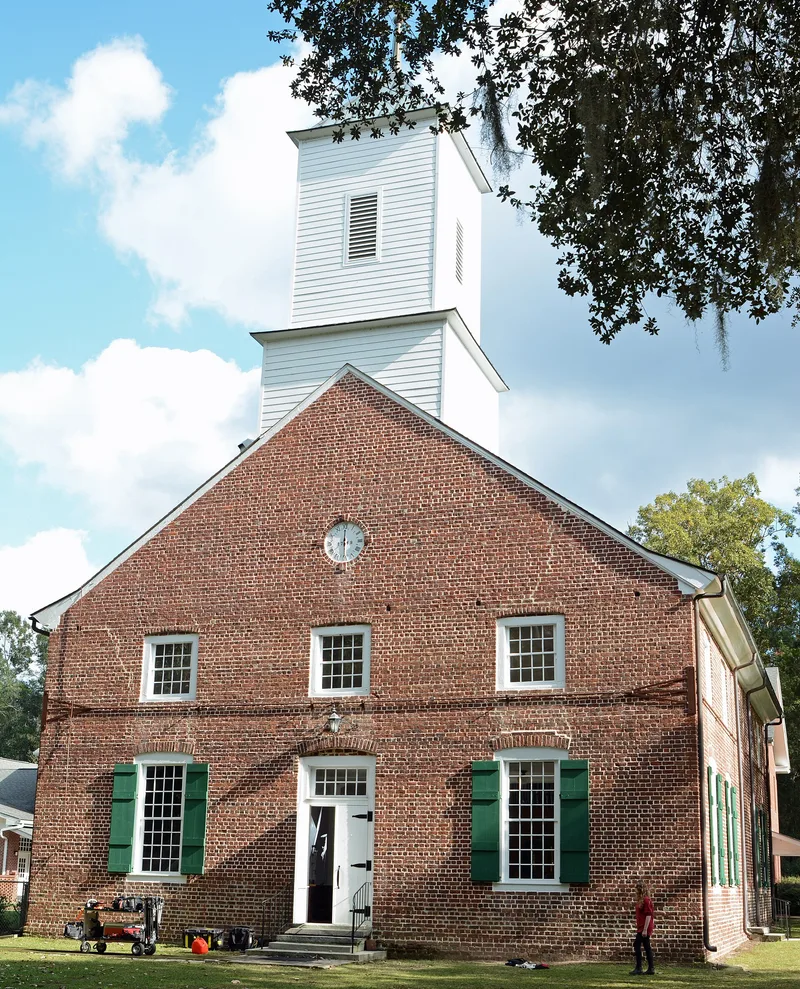
Jerusalem Lutheran Church and the surrounding townsite of New Ebenezer sit on a bluff above the Savannah River east of Springfield, Georgia. Salzburger Protestant refugees moved the settlement here in 1736 after their first site, six miles away, proved unhealthy and infertile. Oglethorpe prescribed a town plan with 160 house lots, a marketplace, common buildings and mills. The Salzburgers opened an orphanage in 1738 and produced over half of the colony's silk after 1750. Nothing of the town survives except the church and cemetery. The one-story brick church, built in 1767-69 from bricks made on the premises, has English bond walls 21 inches thick and an interior balcony. British troops used it as a hospital and stable during the Revolutionary War, and Union soldiers occupied it in 1864. The congregation has been continuous apart from the British occupation. A museum, a Sunday School building and a relocated Salzburger dwelling stand nearby.
Machine-generated summary. This summary was generated by a language model from the official nomination document and has not been reviewed line by line by an editor. It may contain errors. Check the source document before relying on any detail. Source: nomination document (PDF) · catalog entry. Generated October 2026 (model claude-sonnet-5-5, prompt v1.0-2026-10-29).
| Period of significance | 1736, 1767-69 (18th Century) |
|---|---|
| Areas of significance | Industry, Military, Religion, Social History, Agriculture |
| Acreage | 48 |
| Boundary source | NPS cultural-resource GIS polygon |
| Full listing page | Ebenezer Townsite and Jerusalem Lutheran Church (property record) |
What listing means for this property
This is a historic district. Buildings within its boundary are either contributing (they add to the district's significance) or non-contributing. Owners of contributing income-producing buildings can claim the 20% federal rehabilitation tax credit; homeowners should look at state credits. National Register districts impose no design review by themselves; a local historic district ordinance, if one exists, does (the difference explained).
General information, not legal or tax advice. Rules change; confirm with your State Historic Preservation Office or a qualified adviser.