Downtown Waycross Historic District

Why it's listed
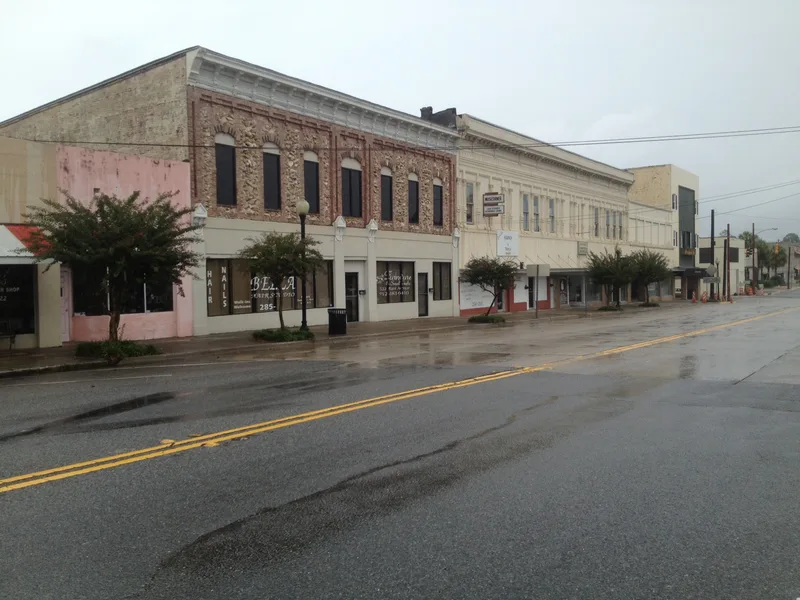
Downtown Waycross, in Ware County, Georgia, is a district of about 15 blocks shaped by the railroad. The city plan was laid out in the early 1870s at the junction of two rail lines. Its grid sits at an angle to the tracks, which created triangular blocks, two of them now parks. Most buildings are attached one- to three-story brick commercial buildings with storefronts below and rows of windows above. Larger landmarks include the former U.S. Post Office and Courthouse of 1911, the five-story Bunn Building, the Phoenix Hotel, the seven-story Ware Hotel of 1928, the former YMCA designed by Henry Klutho, two railroad depots, and two churches. Gas stations, garages, warehouses and a 1939 Moderne bus station record the arrival of road travel. The district was recognized for its architecture, its role as the commercial center of a rail hub, and its distinctive railroad-center plan. Its period of significance runs from 1870 to 1942.
Machine-generated summary. This summary was generated by a language model from the official nomination document and has not been reviewed line by line by an editor. It may contain errors. Check the source document before relying on any detail. Source: nomination document (PDF) · catalog entry. Generated October 2026 (model claude-sonnet-5-5, prompt v1.0-2026-10-29).
| Period of significance | 1870-1942 |
|---|---|
| Styles | Late Victorian (Italianate); Late 19th and 20th Century Revivals (Classical Revival, Late Gothic Revival, Mission/Spanish Colonial Revival, Italian Renaissance); Modern Movement (Moderne, Art Deco) |
| Areas of significance | Community Planning and Development, Commerce, Transportation, Architecture |
| Acreage | 50 |
| Boundary source | NPS cultural-resource GIS polygon |
| Full listing page | Downtown Waycross Historic District (property record) |
What listing means for this property
This is a historic district. Buildings within its boundary are either contributing (they add to the district's significance) or non-contributing. Owners of contributing income-producing buildings can claim the 20% federal rehabilitation tax credit; homeowners should look at state credits. National Register districts impose no design review by themselves; a local historic district ordinance, if one exists, does (the difference explained).
General information, not legal or tax advice. Rules change; confirm with your State Historic Preservation Office or a qualified adviser.