Donaldson-Bannister House and Cemetery

The National Park Service has not published a boundary polygon for this district; the map shows the listed properties inside it and the district's reference point.
Why it's listed
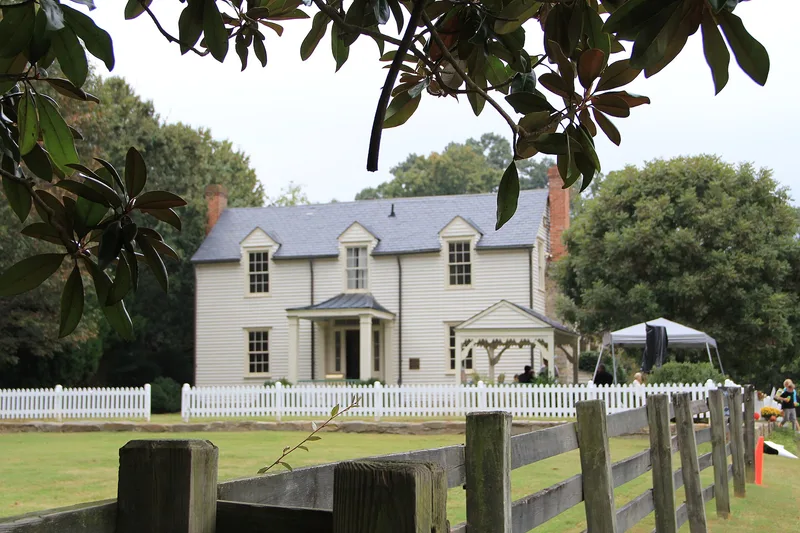
Built around 1870 for farmer William J. Donaldson, this two-story house on Chamblee-Dunwoody Road in Dunwoody began as a central-hall Plantation Plain-type dwelling on a farm that grew to more than 1,000 acres. A rear ell was added in the 1880s. After the farm was divided and sold in 1935, Lois Pattillo Bannister bought the house and hired architect Francis Palmer Smith to remake it in Colonial Revival style influenced by Colonial Williamsburg. He added a columned portico, three wall dormers, pedimented door surrounds, paneled cabinets and moldings, and the house grew to eleven rooms. Bannister also added a barn, guesthouse and garage and had the grounds landscaped with gardens and brick walks. Donaldson's washhouse, commissary, blacksmith shop and well remain. A fenced cemetery holds 27 plots of Donaldson family members who died between 1883 and 1931. A 1998 tornado badly damaged the house, which was then restored to its 1935 exterior. It is now a museum, significant for its architecture and its cemetery landscape.
Machine-generated summary. This summary was generated by a language model from the official nomination document and has not been reviewed line by line by an editor. It may contain errors. Check the source document before relying on any detail. Source: nomination document (PDF) · catalog entry. Generated October 2026 (model claude-sonnet-5-5, prompt v1.0-2026-10-29).
| Period of significance | c.1870-1942 |
|---|---|
| Styles | Late 19th and 20th Century Revivals: Colonial Revival |
| Areas of significance | Architecture, Landscape Architecture |
| Acreage | 2.8 |
| Boundary source | not published |
| Full listing page | Donaldson-Bannister House and Cemetery (property record) |
What listing means for this property
This is a historic district. Buildings within its boundary are either contributing (they add to the district's significance) or non-contributing. Owners of contributing income-producing buildings can claim the 20% federal rehabilitation tax credit; homeowners should look at state credits. National Register districts impose no design review by themselves; a local historic district ordinance, if one exists, does (the difference explained).
General information, not legal or tax advice. Rules change; confirm with your State Historic Preservation Office or a qualified adviser.