Decatur Cemetery

Why it's listed
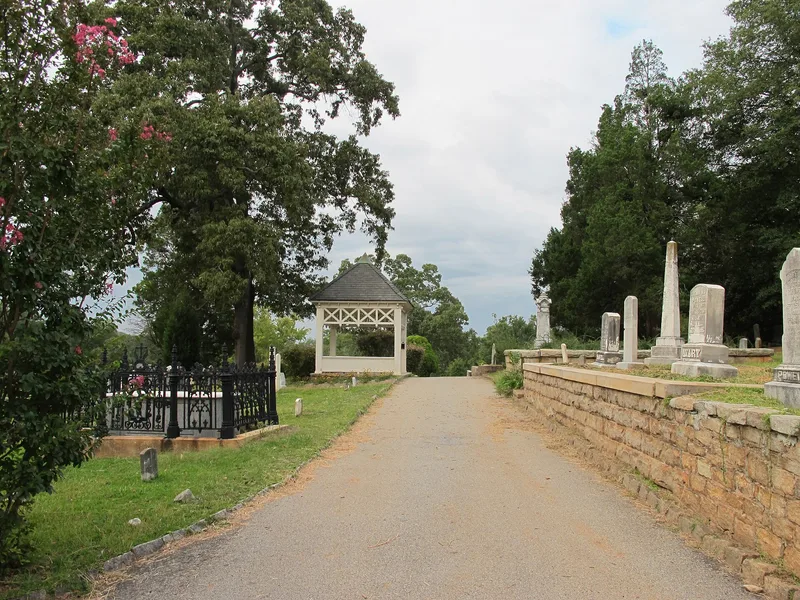
Decatur Cemetery is a 58-acre municipal burial ground on the highest ground northeast of downtown Decatur, Georgia. Burials began by 1826, and the city took responsibility for it in 1832. The oldest section, about 7.5 acres, holds hand-carved pioneer stones, Victorian obelisks, draped urns and ornate iron-fenced lots. A southern portion includes an African-American section with distinctive cast concrete markers, a pauper burial area and graves of orphanage children. In 1881 the city carried out a landscape plan in the spirit of the rural cemetery movement, adding curving roads, granite walks, stairs, terraces, a wrought-iron fence with fieldstone piers and a lattice-detailed wooden well house, now used as a gazebo. Later additions were laid out by civil engineers and landscape architects, including William Pauley. The cemetery was listed for its funerary art, landscape design, community planning role and ethnic heritage. It remains an active cemetery and a public green space used by residents and office workers.
Machine-generated summary. This summary was generated by a language model from the official nomination document and has not been reviewed line by line by an editor. It may contain errors. Check the source document before relying on any detail. Source: nomination document (PDF) · catalog entry. Generated October 2026 (model claude-sonnet-5-5, prompt v1.0-2026-10-29).
| Period of significance | 1826 - 1947 |
|---|---|
| Styles | No style (cemetery) |
| Areas of significance | Art, Community Planning and Development, Black, Landscape Architecture |
| Acreage | 58 |
| Boundary source | NPS cultural-resource GIS polygon |
| Full listing page | Decatur Cemetery (property record) |
What listing means for this property
This is a historic district. Buildings within its boundary are either contributing (they add to the district's significance) or non-contributing. Owners of contributing income-producing buildings can claim the 20% federal rehabilitation tax credit; homeowners should look at state credits. National Register districts impose no design review by themselves; a local historic district ordinance, if one exists, does (the difference explained).
General information, not legal or tax advice. Rules change; confirm with your State Historic Preservation Office or a qualified adviser.