Davis, Daniel M., House

Why it's listed
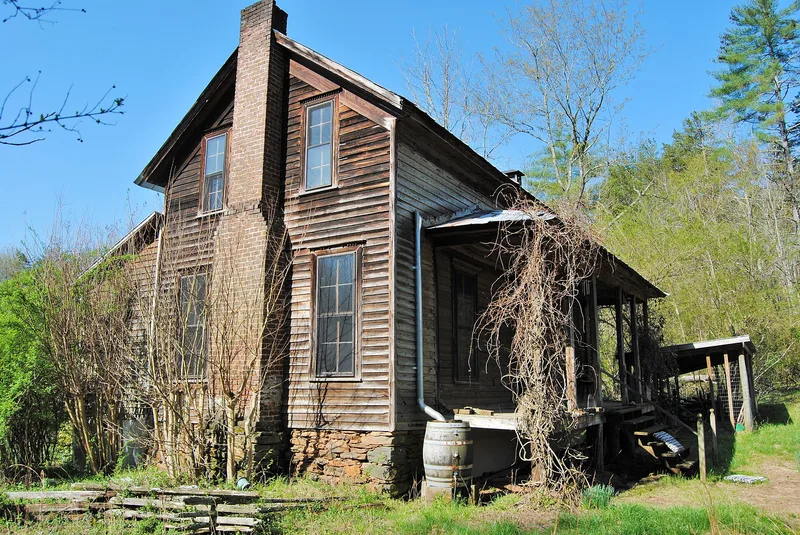
Set in rural wooded foothills near Dahlonega, this unpainted one-and-one-half-story farmhouse was built by Daniel M. Davis between 1878 and 1880. It follows the Central Hall Cottage plan, with two main rooms flanking a central hall and staircase, and a rear ell holding the kitchen and dining room. Log and hand-sawn lumber framing, pegged mortise-and-tenon joints, heart-pine interior boards, and corner boards carved from single logs show 19th-century hand craftsmanship. Historic log and frame outbuildings survive, including a barn, smokehouse and corn crib. The 23-acre farm includes a rocked spring and an orchard. It was listed for its architecture and for its role as a small subsistence farm typical of north Georgia. The land is also tied to Davis's grandfather, Daniel Davis, who lived among the Cherokee before their 1838 removal. The Davis family held the property until 1990, and the road that once fronted the house was moved in the 1930s.
Machine-generated summary. This summary was generated by a language model from the official nomination document and has not been reviewed line by line by an editor. It may contain errors. Check the source document before relying on any detail. Source: nomination document (PDF) · catalog entry. Generated October 2026 (model claude-sonnet-5-5, prompt v1.0-2026-10-29).
| Period of significance | c.1880-1948 |
|---|---|
| Styles | Other: Central Hall Cottage |
| Areas of significance | Architecture, Agriculture |
| Acreage | 23 |
| Boundary source | NPS cultural-resource GIS polygon |
| Full listing page | Davis, Daniel M., House (property record) |
What listing means for this property
This is a historic district. Buildings within its boundary are either contributing (they add to the district's significance) or non-contributing. Owners of contributing income-producing buildings can claim the 20% federal rehabilitation tax credit; homeowners should look at state credits. National Register districts impose no design review by themselves; a local historic district ordinance, if one exists, does (the difference explained).
General information, not legal or tax advice. Rules change; confirm with your State Historic Preservation Office or a qualified adviser.