Cameron Court District

The National Park Service has not published a boundary polygon for this district; the map shows the listed properties inside it and the district's reference point.
Why it's listed
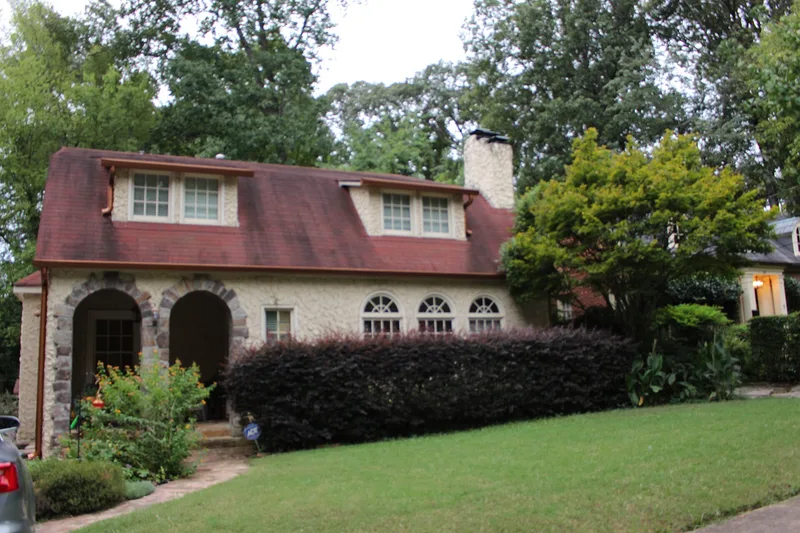
Cameron Court is a small subdivision of modest one and one-and-a-half story houses on a short, gently curving cul-de-sac running east from Briarcliff Road, about three miles northeast of downtown Atlanta. Developed in the mid to late 1920s, it sits just beyond the western edge of Druid Hills. The houses, built in Craftsman/Bungalow, Spanish Mission, Tudor and Colonial styles, share a common setback, similar size and brick or stucco walls, giving the street a nearly rowhouse-like feel. Informal front yards, sidewalks, curbs and stone gateposts complete the setting. The nomination argues that the district matters for its planning, architecture and landscaping. Its cul-de-sac is described as the earliest documented use of that feature in the Atlanta area. H.W. Nicholes, a prominent suburban builder also active in Druid Hills and Atkins Park, planned the subdivision and built at least half of the houses before filing for bankruptcy in 1926. Other builders then finished it according to his plan.
Machine-generated summary. This summary was generated by a language model from the official nomination document and has not been reviewed line by line by an editor. It may contain errors. Check the source document before relying on any detail. Source: nomination document (PDF) · catalog entry. Generated October 2026 (model claude-sonnet-5-5, prompt v1.0-2026-10-29).
| Period of significance | 1900- |
|---|---|
| Styles | Craftsman/Bungalow, Spanish Mission, Tudor, and Colonial |
| Areas of significance | Community Planning and Development, Architecture |
| Acreage | 6 |
| Boundary source | not published |
| Full listing page | Cameron Court District (property record) |
What listing means for this property
This is a historic district. Buildings within its boundary are either contributing (they add to the district's significance) or non-contributing. Owners of contributing income-producing buildings can claim the 20% federal rehabilitation tax credit; homeowners should look at state credits. National Register districts impose no design review by themselves; a local historic district ordinance, if one exists, does (the difference explained).
General information, not legal or tax advice. Rules change; confirm with your State Historic Preservation Office or a qualified adviser.