Cabbagetown District

Why it's listed
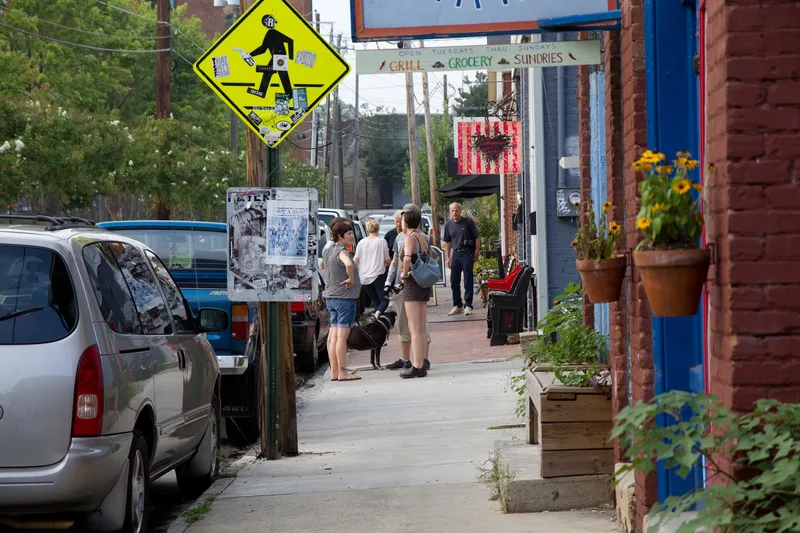
Cabbagetown is a textile mill village close to downtown Atlanta, built around the Fulton Bag and Cotton Mills. The company began in 1881 on the site of a former rolling mill, chosen for its rail access and water supply. Mill buildings of five-story brick in a provincial neo-Romanesque style went up in stages between 1895 and 1922. Because the area was sparsely settled, the owners built housing for workers. The oldest surviving houses stand on Reinhardt Street and date from 1886 to 1892. Later streets hold shotgun cottages, duplexes, bungalows and Victorian-influenced homes on small, narrow lots. The mill supplied lawns, security, medical, dental, library and nursery services until the Elsas family sold it in 1957. The district was listed for its role as the site of the first mill making standardized cotton bags and for being one of the South's longest-lived factory-supported villages. Founder Jacob Elsas is credited with seeing the sense in processing cotton locally.
Machine-generated summary. This summary was generated by a language model from the official nomination document and has not been reviewed line by line by an editor. It may contain errors. Check the source document before relying on any detail. Source: nomination document (PDF) · catalog entry. Generated October 2026 (model claude-sonnet-5-5, prompt v1.0-2026-10-29).
| Period of significance | 1800-1899 |
|---|---|
| Styles | Provincial neo-Romanesque mill buildings; mill village housing including shotgun cottages, bungalows and Victorian-influenced cottages |
| Areas of significance | Industry, Community Planning and Development, Commerce, Architecture |
| Acreage | 104 |
| Boundary source | NPS cultural-resource GIS polygon |
| Full listing page | Cabbagetown District (property record) |
What listing means for this property
This is a historic district. Buildings within its boundary are either contributing (they add to the district's significance) or non-contributing. Owners of contributing income-producing buildings can claim the 20% federal rehabilitation tax credit; homeowners should look at state credits. National Register districts impose no design review by themselves; a local historic district ordinance, if one exists, does (the difference explained).
General information, not legal or tax advice. Rules change; confirm with your State Historic Preservation Office or a qualified adviser.