Bainbridge Residential Historic District

Why it's listed
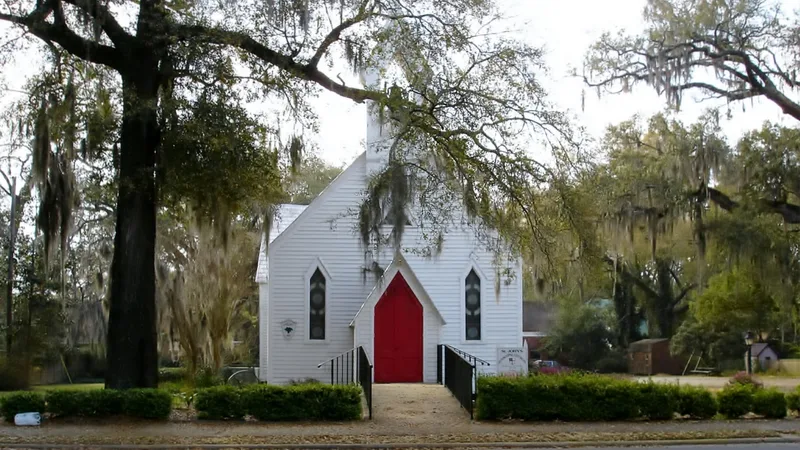
This 125-acre neighborhood east and south of downtown Bainbridge, in southwest Georgia, holds the largest intact collection of historic houses in the city. Most of its 197 contributing buildings went up between about 1880 and 1930, when separate subdivisions merged into one varied neighborhood. Two houses from the 1850s, the Farrar House and the Harrel House, represent the town's antebellum years. Styles include Queen Anne, Dutch Colonial Revival, Neoclassical, Craftsman bungalow, and American Foursquare, with simple pyramidal-roofed cottages along Washington Street and Georgia Avenue. Shotwell Street, the widest avenue, carries the grandest residences and two prominent churches: First Baptist, with a dome modeled on Monticello, and First United Methodist, a Romanesque Revival building with a bell tower. The district was listed for its architecture and as a good example of an evolved neighborhood that grew piecemeal from the town's original grid, with a mix of house sizes, types, and periods.
Machine-generated summary. This summary was generated by a language model from the official nomination document and has not been reviewed line by line by an editor. It may contain errors. Check the source document before relying on any detail. Source: nomination document (PDF) · catalog entry. Generated October 2026 (model claude-sonnet-5-5, prompt v1.0-2026-10-29).
| Period of significance | 1850-1930 |
|---|---|
| Styles | Victorian Eclectic (Eastlake and Stick-style detailing), Queen Anne, Neoclassical, Craftsman/Bungalow, Georgian Revival, Dutch Colonial, American Foursquare, Greek Revival, Romanesque Revival |
| Areas of significance | Community Planning and Development, Architecture |
| Acreage | 125 |
| Boundary source | NPS cultural-resource GIS polygon |
| Full listing page | Bainbridge Residential Historic District (property record) |
What listing means for this property
This is a historic district. Buildings within its boundary are either contributing (they add to the district's significance) or non-contributing. Owners of contributing income-producing buildings can claim the 20% federal rehabilitation tax credit; homeowners should look at state credits. National Register districts impose no design review by themselves; a local historic district ordinance, if one exists, does (the difference explained).
General information, not legal or tax advice. Rules change; confirm with your State Historic Preservation Office or a qualified adviser.