Augusta Canal Industrial District

Why it's listed
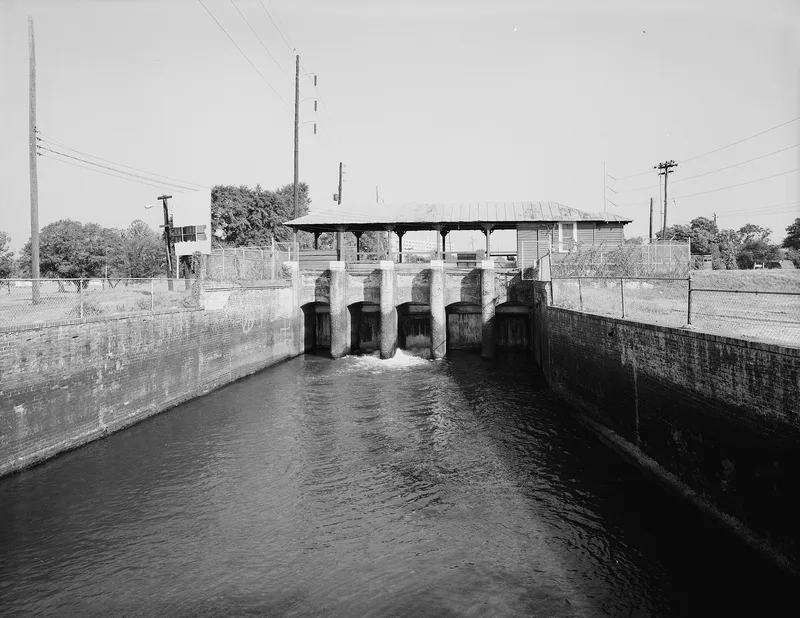
Augusta's canal runs nine miles along the Savannah River, carrying water from a lock and dam through downtown to power industry. Surveyed in 1844 and opened in 1846, it was built to give the city a new economic base as railroads reduced river trade. It was enlarged between 1872 and 1875, raising horsepower from 600 to 14,000. That expansion prompted large cotton mills on its banks: Enterprise, Sibley, John P. King and Blanche. Local investors organized them, importing machinery and managers from New England. The brick mills combine Italianate and Romanesque touches with practical features such as slow-burning outside stair towers, flat roofs and rows of windows for natural light. Sibley Mill stands on the site of the Confederate Powder Works, whose refinery chimney remains. The canal still supplies power and water, and most mills were operating when documented, while Blanche Mill had closed. The nominated district also covers the canal levees and the mill sites.
Machine-generated summary. This summary was generated by a language model from the official nomination document and has not been reviewed line by line by an editor. It may contain errors. Check the source document before relying on any detail. Source: nomination document (PDF) · catalog entry. Generated October 2026 (model claude-sonnet-5-5, prompt v1.0-2026-10-29).
| Styles | Italianate; John P. King Mill compared to Lombard Romanesque mills |
|---|---|
| Areas of significance | Industry, Engineering, Transportation |
| Acreage | 225 |
| Boundary source | NPS cultural-resource GIS polygon |
| Full listing page | Augusta Canal Industrial District (property record) |
What listing means for this property
This is a historic district. Buildings within its boundary are either contributing (they add to the district's significance) or non-contributing. Owners of contributing income-producing buildings can claim the 20% federal rehabilitation tax credit; homeowners should look at state credits. National Register districts impose no design review by themselves; a local historic district ordinance, if one exists, does (the difference explained).
General information, not legal or tax advice. Rules change; confirm with your State Historic Preservation Office or a qualified adviser.