Whitley Heights Historic District

Why it's listed
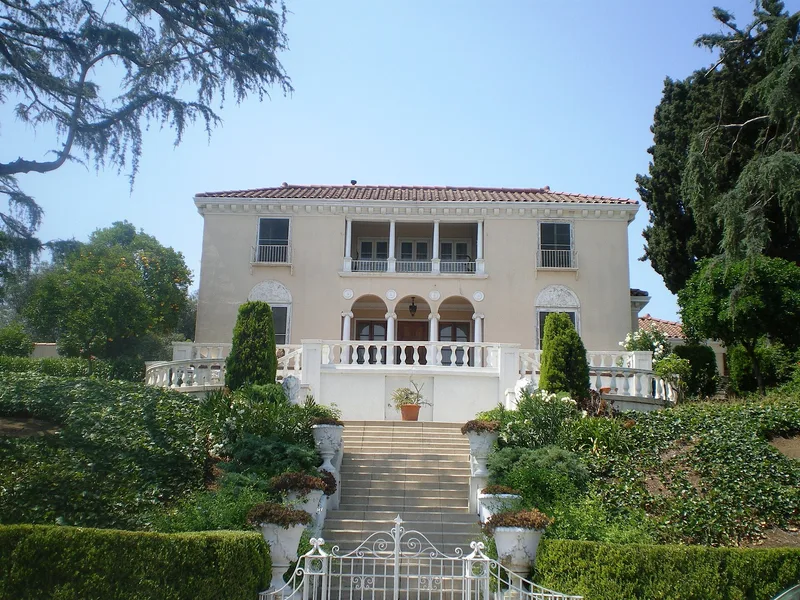
Whitley Heights is a hillside residential neighborhood in Hollywood, laid out by developer H. J. Whitley, who filed the first tract maps in 1902 and 1903. It contains 163 single family houses and three small apartment buildings, most built between 1906 and 1929, with the main burst of building from 1918 to 1928. Deed restrictions required Italian or Spanish style architecture with plastered exteriors and limited houses to one story at street level, so every lot kept a view. Narrow curving streets, retaining walls, pedestrian stairways, decorative iron posts with chains, and row garages shaped the village-like plan. Utilities were placed underground early, and streets were paved in concrete by 1926. The area became known as home to many film and theatre figures. Freeway construction in 1948 and 1949 and other civic projects removed some homes, but the Mediterranean character and original planning remain largely intact. Twenty-five buildings do not contribute to the district.
Machine-generated summary. This summary was generated by a language model from the official nomination document and has not been reviewed line by line by an editor. It may contain errors. Check the source document before relying on any detail. Source: nomination document (PDF) · catalog entry. Generated October 2026 (model claude-sonnet-5-5, prompt v1.0-2026-10-29).
| Styles | Mediterranean (Italian and Spanish types), with some Modern, California Moderne and Early American houses |
|---|---|
| Areas of significance | Community Planning and Development, Architecture, Performing Arts |
| Acreage | 32 |
| Boundary source | NPS cultural-resource GIS polygon |
| Full listing page | Whitley Heights Historic District (property record) |
What listing means for this property
This is a historic district. Buildings within its boundary are either contributing (they add to the district's significance) or non-contributing. Owners of contributing income-producing buildings can claim the 20% federal rehabilitation tax credit; homeowners should look at state credits. National Register districts impose no design review by themselves; a local historic district ordinance, if one exists, does (the difference explained).
General information, not legal or tax advice. Rules change; confirm with your State Historic Preservation Office or a qualified adviser.