Weaverville Historic District

Why it's listed
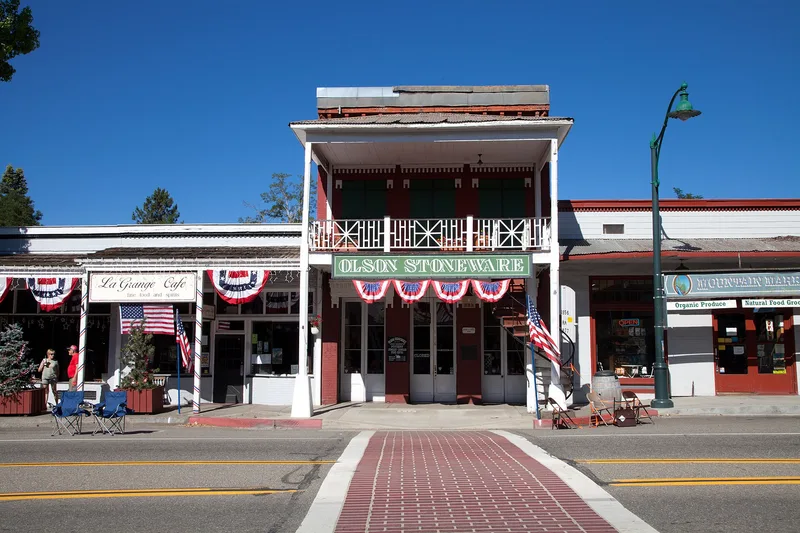
Weaverville's historic district covers about 11 acres on both sides of Main Street, running roughly 1,800 feet south from Garden Gulch. Around 25 buildings remain from the Gold Rush town named for John Weaver in 1850. Early wooden structures lost to repeated fires were replaced with brick, and by 1858 about 25 brick buildings lined Main Street. Several have upper and lower floors under separate ownership, reached by handmade outside spiral iron staircases. The district also includes the Trinity County Courthouse, built in 1856 and bought by the county in 1865, a drugstore operating since 1855, a bandstand from 1902, and Chinese tamped earth buildings from the 1860s. The Joss House, a Chinese temple rebuilt in 1874 after a fire, anchors the southern end. Weaverville served as the supply hub for miners across a large part of Northern California. Many buildings have been adapted for modern use but keep much of their original character.
Machine-generated summary. This summary was generated by a language model from the official nomination document and has not been reviewed line by line by an editor. It may contain errors. Check the source document before relying on any detail. Source: nomination document (PDF) · catalog entry. Generated October 2026 (model claude-sonnet-5-5, prompt v1.0-2026-10-29).
| Period of significance | 19th Century |
|---|---|
| Styles | Gold Rush era commercial and residential buildings of Northern California mining towns, including brick, wood frame and Chinese tamped earth construction |
| Areas of significance | Commerce, Social History |
| Acreage | 11 |
| Boundary source | NPS cultural-resource GIS polygon |
| Full listing page | Weaverville Historic District (property record) |
What listing means for this property
This is a historic district. Buildings within its boundary are either contributing (they add to the district's significance) or non-contributing. Owners of contributing income-producing buildings can claim the 20% federal rehabilitation tax credit; homeowners should look at state credits. National Register districts impose no design review by themselves; a local historic district ordinance, if one exists, does (the difference explained).
General information, not legal or tax advice. Rules change; confirm with your State Historic Preservation Office or a qualified adviser.