Weaver, Henry, House

The National Park Service has not published a boundary polygon for this district; the map shows the listed properties inside it and the district's reference point.
Why it's listed
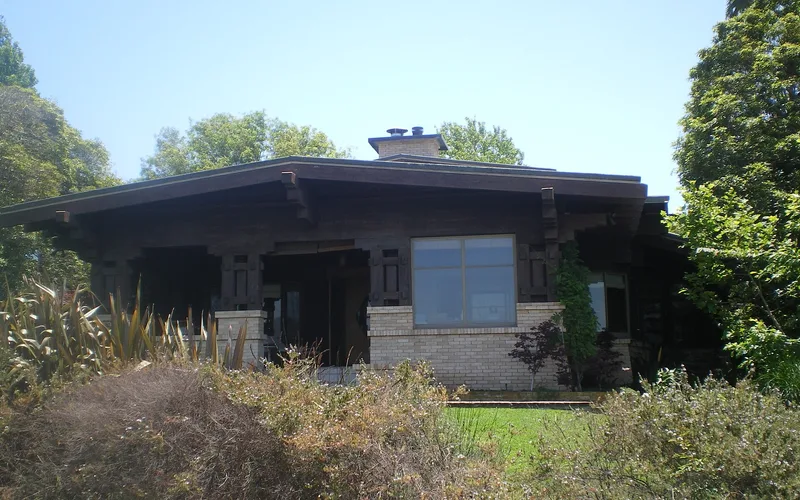
Perched above Adelaide Drive on the rim of Santa Monica Canyon, this two-story Craftsman bungalow was built in 1910 for Henry Weaver, a retired hotel proprietor. The Milwaukee Building Company designed and built it for an estimated $13,250. Shingle walls, a battered cream brick waist wall and several low-pitched gables with deep eaves and rounded beam ends give it a strongly horizontal look with an Oriental influence. Inside, mahogany and quarter-sawn oak paneling, built-ins, a large brick fireplace and oak floors survive. The lot also holds a garage and a pool added in 1986. The house is recognized as an outstanding example of Craftsman design and workmanship. It marked a turning point for the Milwaukee Building Company, which later became prominent in Los Angeles. Located on the most prestigious street in the Palisades Tract, it remains one of the best-preserved Craftsman homes in Santa Monica and the western Los Angeles area.
Machine-generated summary. This summary was generated by a language model from the official nomination document and has not been reviewed line by line by an editor. It may contain errors. Check the source document before relying on any detail. Source: nomination document (PDF) · catalog entry. Generated October 2026 (model claude-sonnet-5-5, prompt v1.0-2026-10-29).
| Period of significance | 1910 |
|---|---|
| Styles | Bungalow/Craftsman |
| Areas of significance | Architecture |
| Acreage | 0.9 |
| Boundary source | not published |
| Full listing page | Weaver, Henry, House (property record) |
What listing means for this property
This is a historic district. Buildings within its boundary are either contributing (they add to the district's significance) or non-contributing. Owners of contributing income-producing buildings can claim the 20% federal rehabilitation tax credit; homeowners should look at state credits. National Register districts impose no design review by themselves; a local historic district ordinance, if one exists, does (the difference explained).
General information, not legal or tax advice. Rules change; confirm with your State Historic Preservation Office or a qualified adviser.