Vikingsholm

Why it's listed
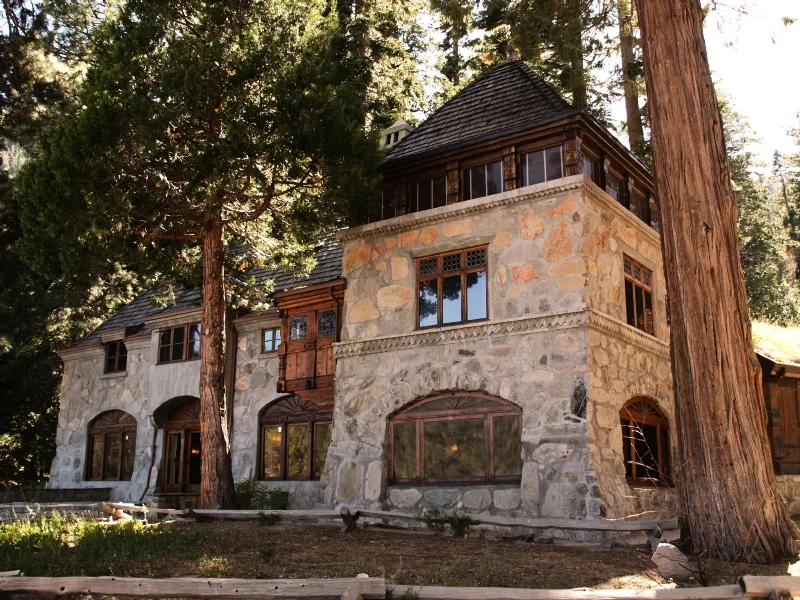
Vikingsholm is a Scandinavian-inspired summer estate at the foot of Emerald Bay on Lake Tahoe's southwest shore. Built in the summers of 1928 to 1930 for Mrs. Lora J. Knight, it was designed by architect Lennart Palme and built by contractor Matt Green using local granite, pine, fir and cedar. Four wings enclose a courtyard, a plan based on Swedish and Welsh farmsteads. Features include hand-adzed siding, carved dragon-head beams, sod roofs, red brick crown chimneys and Swedish stained glass. Inside, painted ceilings, hand-wrought ironwork and Mrs. Knight's collection of Scandinavian antiques remain. Palme and Knight drew ideas from travels in Sweden and Norway, including peasant farms and open-air museums. The district also includes a workshop, duplex, teahouse on Fannette Island, gardener's cottage, transformer building, stonework and early roads. California State Parks has owned the property since 1953 and opens it to visitors, who reach it by a one-mile footpath.
Machine-generated summary. This summary was generated by a language model from the official nomination document and has not been reviewed line by line by an editor. It may contain errors. Check the source document before relying on any detail. Source: nomination document (PDF) · catalog entry. Generated October 2026 (model claude-sonnet-5-5, prompt v1.0-2026-10-29).
| Styles | Late 19th and Early 20th Century Revivals: Norwegian and Swedish farmstead revival, Welsh gatehouse farmstead revival, French Eclectic Style |
|---|---|
| Areas of significance | Architecture |
| Acreage | 162 |
| Boundary source | NPS cultural-resource GIS polygon |
| Full listing page | Vikingsholm (property record) |
What listing means for this property
This is a historic district. Buildings within its boundary are either contributing (they add to the district's significance) or non-contributing. Owners of contributing income-producing buildings can claim the 20% federal rehabilitation tax credit; homeowners should look at state credits. National Register districts impose no design review by themselves; a local historic district ordinance, if one exists, does (the difference explained).
General information, not legal or tax advice. Rules change; confirm with your State Historic Preservation Office or a qualified adviser.