Venice Canal Historic District

Why it's listed
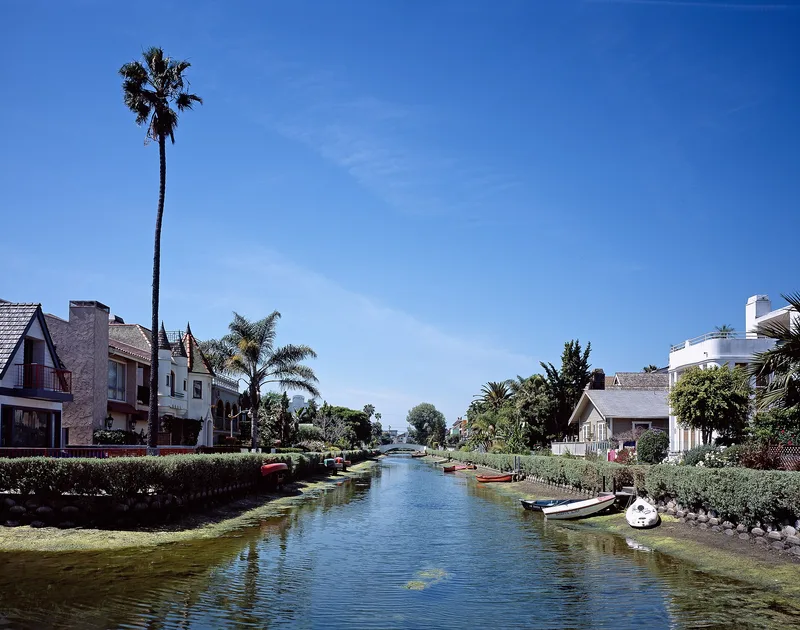
Six canals in the Venice area of Los Angeles form this district, which covers the public rights of way rather than the private houses beside them. Laid out in 1905 as the Short Line Beach Venice Canal Subdivision Number 1, the system includes four parallel canals about 1,100 feet long, a bordering Grand Canal and Eastern Canal. The channels have a trapezoidal cross section lined with clay, with concrete banks and walks, four concrete vehicular bridges and nine wooden pedestrian bridges. Railway executives Moses Sherman and Eli Clark sponsored the development, which was patterned after Venice, Italy and tied to the Venice Short Line railway. The canals to the north were filled and paved starting in 1929, which leaves this group as the major surviving portion of the system. The canals have kept their basic design since 1905, though silt, pollution and aging bridges have taken a toll. Adjacent housing is a mix of eras and was excluded from the boundary.
Machine-generated summary. This summary was generated by a language model from the official nomination document and has not been reviewed line by line by an editor. It may contain errors. Check the source document before relying on any detail. Source: nomination document (PDF) · catalog entry. Generated October 2026 (model claude-sonnet-5-5, prompt v1.0-2026-10-29).
| Period of significance | 1905-1920 |
|---|---|
| Areas of significance | Community Planning and Development |
| Acreage | 12.1 |
| Boundary source | NPS cultural-resource GIS polygon |
| Full listing page | Venice Canal Historic District (property record) |
What listing means for this property
This is a historic district. Buildings within its boundary are either contributing (they add to the district's significance) or non-contributing. Owners of contributing income-producing buildings can claim the 20% federal rehabilitation tax credit; homeowners should look at state credits. National Register districts impose no design review by themselves; a local historic district ordinance, if one exists, does (the difference explained).
General information, not legal or tax advice. Rules change; confirm with your State Historic Preservation Office or a qualified adviser.