The Forty Acres

Why it's listed
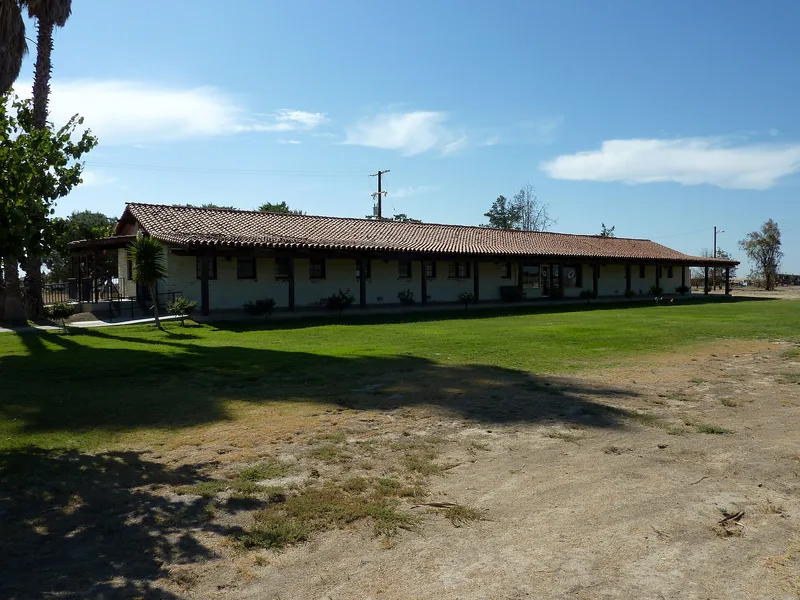
Forty Acres is a rural district at the corner of Garces Highway and Mettler Avenue, three miles west of Delano, California. In 1966 a farmworker organization bought the barren, alkali parcel beside the city dump and turned it into a service center and union headquarters. Between 1966 and 1974, volunteers and supporters, led by builder Richard Chávez, constructed an adobe service station, the steel-frame Roy L. Reuther Memorial Building, a health clinic and a fifty-nine-unit residential building. They also added a well, a tree-shaded park, a stone memorial, a recreational field and roads. Most buildings follow a modest Mission Revival design. The property matters as the base of César Chávez and the United Farm Workers during the table-grape strike and boycott, the first permanent agricultural labor union in the country. Chávez's first public fast took place at the service station, drawing national attention, and the union's work contributed to California's 1975 farm labor law.
Machine-generated summary. This summary was generated by a language model from the official nomination document and has not been reviewed line by line by an editor. It may contain errors. Check the source document before relying on any detail. Source: nomination document (PDF) · catalog entry. Generated October 2026 (model claude-sonnet-5-5, prompt v1.0-2026-10-29).
| Styles | Mission/Spanish Colonial Revival |
|---|---|
| Areas of significance | Economics, Social History, Hispanic, Pacific-Islander |
| Acreage | 40 |
| Boundary source | NPS cultural-resource GIS polygon |
| Full listing page | The Forty Acres (property record) |
What listing means for this property
This is a historic district. Buildings within its boundary are either contributing (they add to the district's significance) or non-contributing. Owners of contributing income-producing buildings can claim the 20% federal rehabilitation tax credit; homeowners should look at state credits. National Register districts impose no design review by themselves; a local historic district ordinance, if one exists, does (the difference explained).
General information, not legal or tax advice. Rules change; confirm with your State Historic Preservation Office or a qualified adviser.