South of Campus Neighborhood

Why it's listed
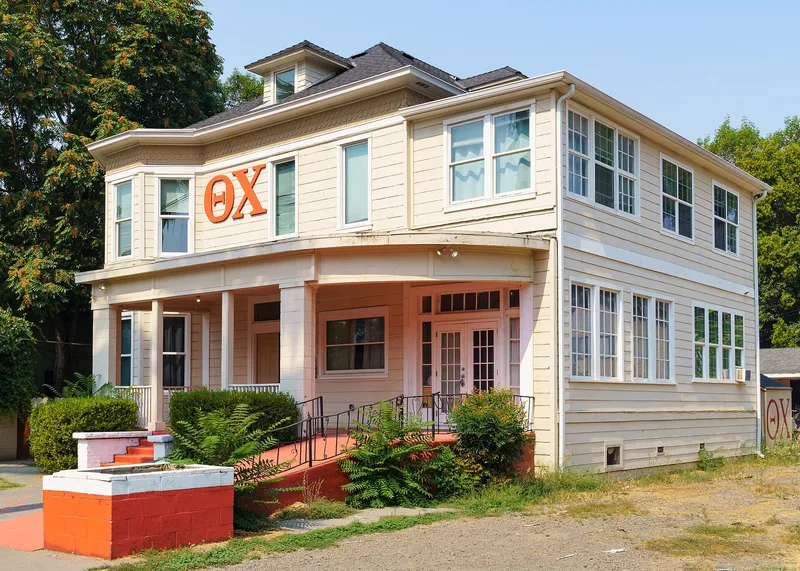
South of Campus is a residential district in Chico, California, on the grid of streets that General John Bidwell laid out in 1860 and 1863. It covers twelve whole blocks and eleven partial blocks, with 116 contributing and 49 noncontributing buildings, most built between 1862 and 1930. From the start it was the preferred address in town, close to downtown, the railroad depot, the churches and the Normal School, and it holds the homes of many prominent citizens. The buildings range from small cottages to large two-and-a-half-story houses in Italianate, Queen Anne, Colonial Revival, Craftsman, Prairie, Monterey Revival and other styles. Two houses, the Stansbury House and the Allen-Sommer-Gage House, were already individually listed. Mature walnut, redwood and chestnut trees, hitching posts and carriage stepping stones add to the setting. The university's growth has brought demolitions, parking lots, a telephone company building and many student rental conversions, which have reduced the integrity of some structures.
Machine-generated summary. This summary was generated by a language model from the official nomination document and has not been reviewed line by line by an editor. It may contain errors. Check the source document before relying on any detail. Source: nomination document (PDF) · catalog entry. Generated October 2026 (model claude-sonnet-5-5, prompt v1.0-2026-10-29).
| Styles | Italianate, Queen Anne, Colonial Revival, Bungalow/Craftsman |
|---|---|
| Areas of significance | Exploration/Settlement, Architecture |
| Acreage | 52 |
| Boundary source | NPS cultural-resource GIS polygon |
| Full listing page | South of Campus Neighborhood (property record) |
What listing means for this property
This is a historic district. Buildings within its boundary are either contributing (they add to the district's significance) or non-contributing. Owners of contributing income-producing buildings can claim the 20% federal rehabilitation tax credit; homeowners should look at state credits. National Register districts impose no design review by themselves; a local historic district ordinance, if one exists, does (the difference explained).
General information, not legal or tax advice. Rules change; confirm with your State Historic Preservation Office or a qualified adviser.