South Bonnie Brae Tract Historic District

The National Park Service has not published a boundary polygon for this district; the map shows the listed properties inside it and the district's reference point.
Why it's listed
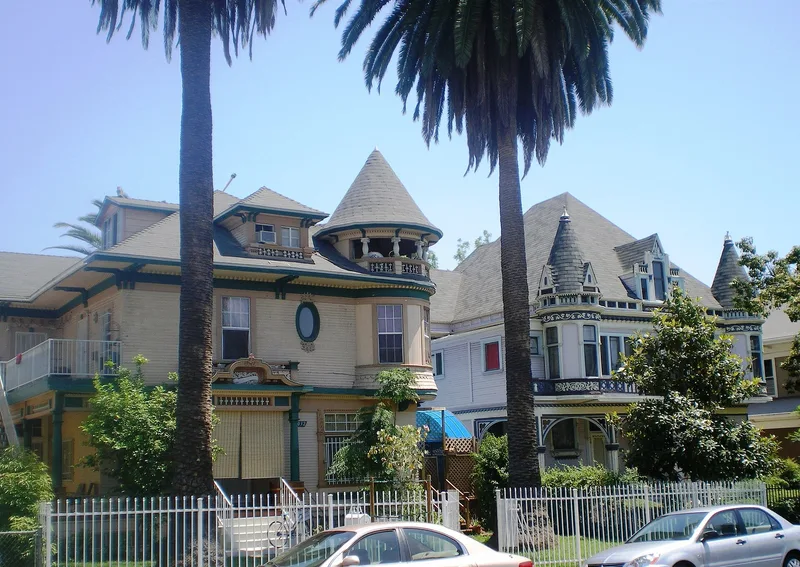
South Bonnie Brae Street, between Olympic Boulevard and 11th Street in Los Angeles, holds a U-shaped group of sixteen buildings, fifteen of them large two-story houses built between about 1890 and 1905. They began as single-family homes in one of the city's older residential neighborhoods. Styles run from Queen Anne Victorian to Colonial Revival, with Chateauesque, Shingle Style and Classic Box examples mixed in. Each house has its own touches, such as carved panels, towers, fishscale shingles, Palladian windows and spindlework, yet the block stays consistent in scale, setback and massing. One 1922 duplex-sized apartment building is the only later intrusion and fits the streetscape. Two houses on South Bonnie Brae and one on West 11th were moved from South Olive Street in 1909. One house, 1036, is Los Angeles Historic-Cultural Monument #99. The district was listed because of its architectural quality and unusually intact streetscape, which the document calls a rare find in Los Angeles.
Machine-generated summary. This summary was generated by a language model from the official nomination document and has not been reviewed line by line by an editor. It may contain errors. Check the source document before relying on any detail. Source: nomination document (PDF) · catalog entry. Generated October 2026 (model claude-sonnet-5-5, prompt v1.0-2026-10-29).
| Styles | Queen Anne Victorian, Colonial Revival, Chateauesque, Shingle Style, Classic Box and eclectic combinations |
|---|---|
| Areas of significance | Architecture |
| Acreage | 3.2 |
| Boundary source | not published |
| Full listing page | South Bonnie Brae Tract Historic District (property record) |
What listing means for this property
This is a historic district. Buildings within its boundary are either contributing (they add to the district's significance) or non-contributing. Owners of contributing income-producing buildings can claim the 20% federal rehabilitation tax credit; homeowners should look at state credits. National Register districts impose no design review by themselves; a local historic district ordinance, if one exists, does (the difference explained).
General information, not legal or tax advice. Rules change; confirm with your State Historic Preservation Office or a qualified adviser.