Sonoma Plaza

Why it's listed
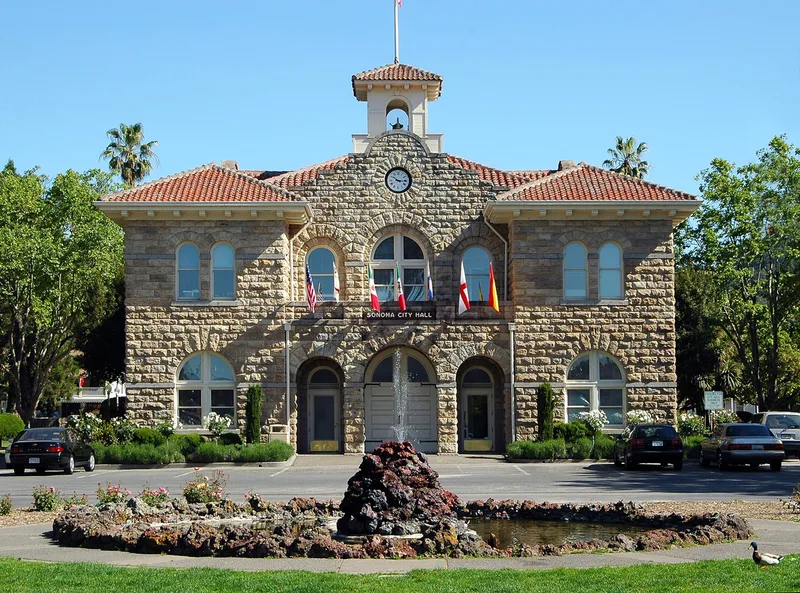
Sonoma Plaza is the historic core of Sonoma, California, built around an eight-acre plaza that General Mariano Vallejo laid out in 1835. Sonoma Pueblo served as the chief Mexican military base in Alta California, established partly to check Russian expansion from Fort Ross. On June 14, 1846, the Bear Flag was raised on the plaza, and on July 9 the American flag replaced it. Eleven one- and two-story Spanish-Mexican adobes still stand around or near the plaza, among them the Sonoma Barracks, Mission San Francisco Solano de Sonoma, the Blue Wing Inn and the Salvador Vallejo Adobe. Victorian and more modern buildings are mixed among them. The plaza is now a city park with City Hall at its center. Several adobes are part of Sonoma State Historic Park and open to visitors, while others are privately owned and house shops, restaurants and homes. The area is described as relatively unaltered, conveying historical integrity and atmosphere.
Machine-generated summary. This summary was generated by a language model from the official nomination document and has not been reviewed line by line by an editor. It may contain errors. Check the source document before relying on any detail. Source: nomination document (PDF) · catalog entry. Generated October 2026 (model claude-sonnet-5-5, prompt v1.0-2026-10-29).
| Styles | Monterey Colonial adobes, with Victorian Italianate, Classic Revival, Gothic Revival and Mission Revival buildings |
|---|---|
| Areas of significance | Military, Politics/Government, Architecture |
| Acreage | 8 |
| Boundary source | NPS cultural-resource GIS polygon |
| Full listing page | Sonoma Plaza (property record) |
What listing means for this property
This is a historic district. Buildings within its boundary are either contributing (they add to the district's significance) or non-contributing. Owners of contributing income-producing buildings can claim the 20% federal rehabilitation tax credit; homeowners should look at state credits. National Register districts impose no design review by themselves; a local historic district ordinance, if one exists, does (the difference explained).
General information, not legal or tax advice. Rules change; confirm with your State Historic Preservation Office or a qualified adviser.