Smiley Park Historic District

Why it's listed
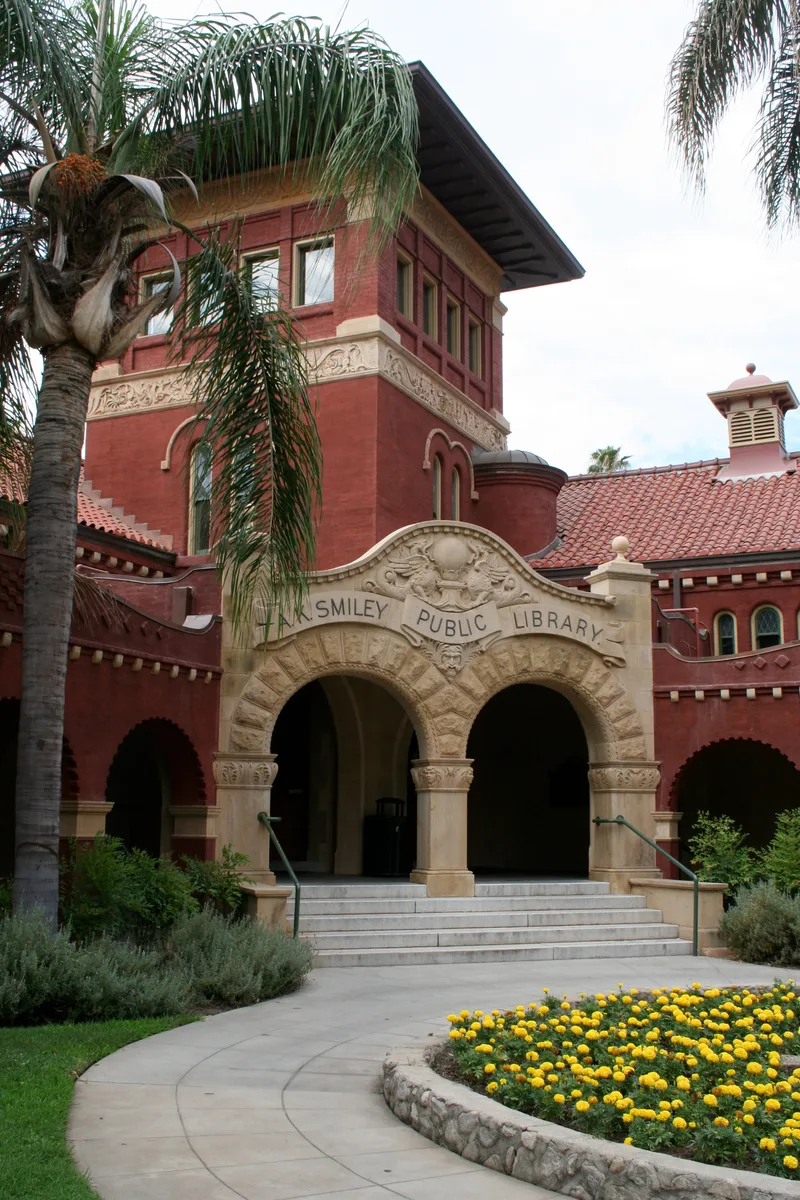
Smiley Park Historic District is a 109-acre residential neighborhood just south of downtown Redlands, California. It is organized around Smiley Park, a ribbon-shaped park formed in 1896, and the Mission Revival Smiley Public Library of 1898, both funded by brothers Alfred and Albert Smiley. The district holds 345 contributing resources, mainly wood-frame houses from 1887 to 1913. About 30 percent are Late Victorian, 25 percent are hipped or gabled cottages, 19 percent are Revival styles, and 24 percent are Craftsman. Two churches, Trinity Church and Unity Church, both from 1904, and a 1902 former hospital also stand within it. Cut-stone curbs, original street widths, mature trees and 1920s cast-cement light poles preserve the early twentieth-century setting. Some houses lost Victorian trim or were converted to duplexes, yet most keep their original appearance. The district was recognized for its architecture and its role in the town's social history.
Machine-generated summary. This summary was generated by a language model from the official nomination document and has not been reviewed line by line by an editor. It may contain errors. Check the source document before relying on any detail. Source: nomination document (PDF) · catalog entry. Generated October 2026 (model claude-sonnet-5-5, prompt v1.0-2026-10-29).
| Period of significance | 1887-1913 |
|---|---|
| Styles | Late Victorian, Queen Anne, Shingle Style, Bungalow/Craftsman, Classical Revival, Colonial Revival, Mission/Spanish Revival, Italian Renaissance |
| Areas of significance | Social History, Architecture |
| Acreage | 109 |
| Boundary source | NPS cultural-resource GIS polygon |
| Full listing page | Smiley Park Historic District (property record) |
What listing means for this property
This is a historic district. Buildings within its boundary are either contributing (they add to the district's significance) or non-contributing. Owners of contributing income-producing buildings can claim the 20% federal rehabilitation tax credit; homeowners should look at state credits. National Register districts impose no design review by themselves; a local historic district ordinance, if one exists, does (the difference explained).
General information, not legal or tax advice. Rules change; confirm with your State Historic Preservation Office or a qualified adviser.