Shannon-Williamson Ranch

Why it's listed
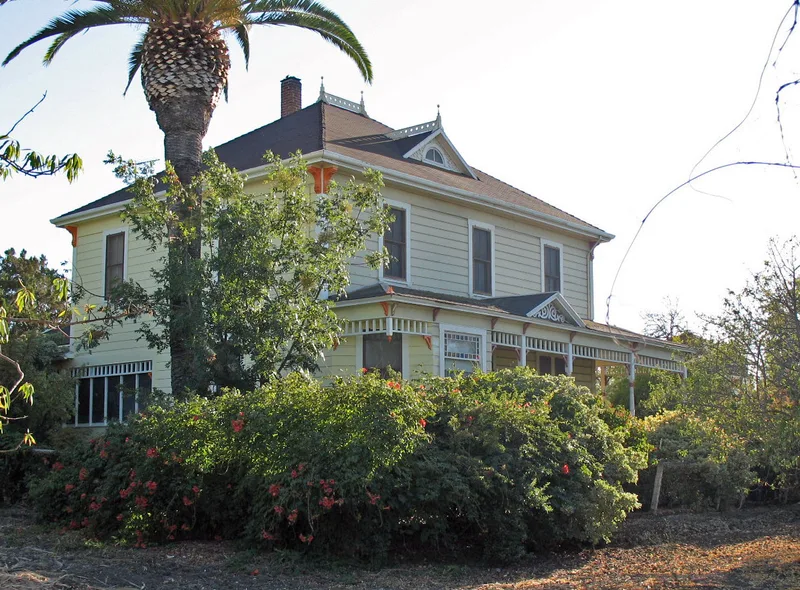
This 398-acre farm on Lone Tree Way in Antioch began as a 160-acre homestead claimed by Irish immigrants Thomas and Mary Ann Shannon in 1867. They grew wheat, barley and hay. William Williamson, Mary Ann's son-in-law, bought the original acreage in 1888 and ran the farm until his death in 1929. After the original log cabin burned around 1894, he and his wife Elizabeth built the present house in two phases, c. 1895 and c. 1896. The complex also holds a tank house, granary, bunk house, cow and buggy barn, horse barn, hay barn, garage, cistern and the site of an early privy. Farm implements and furnishings from the late 1800s are stored in the barns. The property was listed because it is the only 19th century ranch complex in eastern Contra Costa County preserved intact, and it shows the grain-growing economy that once dominated the county. Descendants of the Shannons still own it.
Machine-generated summary. This summary was generated by a language model from the official nomination document and has not been reviewed line by line by an editor. It may contain errors. Check the source document before relying on any detail. Source: nomination document (PDF) · catalog entry. Generated October 2026 (model claude-sonnet-5-5, prompt v1.0-2026-10-29).
| Period of significance | c. 1895-1929 |
|---|---|
| Styles | Eclectic Italianate style with free classic adaptation and spindlework |
| Areas of significance | Agriculture, Exploration/Settlement, Architecture |
| Acreage | 398 |
| Boundary source | NPS cultural-resource GIS polygon |
| Full listing page | Shannon-Williamson Ranch (property record) |
What listing means for this property
This is a historic district. Buildings within its boundary are either contributing (they add to the district's significance) or non-contributing. Owners of contributing income-producing buildings can claim the 20% federal rehabilitation tax credit; homeowners should look at state credits. National Register districts impose no design review by themselves; a local historic district ordinance, if one exists, does (the difference explained).
General information, not legal or tax advice. Rules change; confirm with your State Historic Preservation Office or a qualified adviser.