Sexton, Joseph and Lucy Foster, House

The National Park Service has not published a boundary polygon for this district; the map shows the listed properties inside it and the district's reference point.
Why it's listed
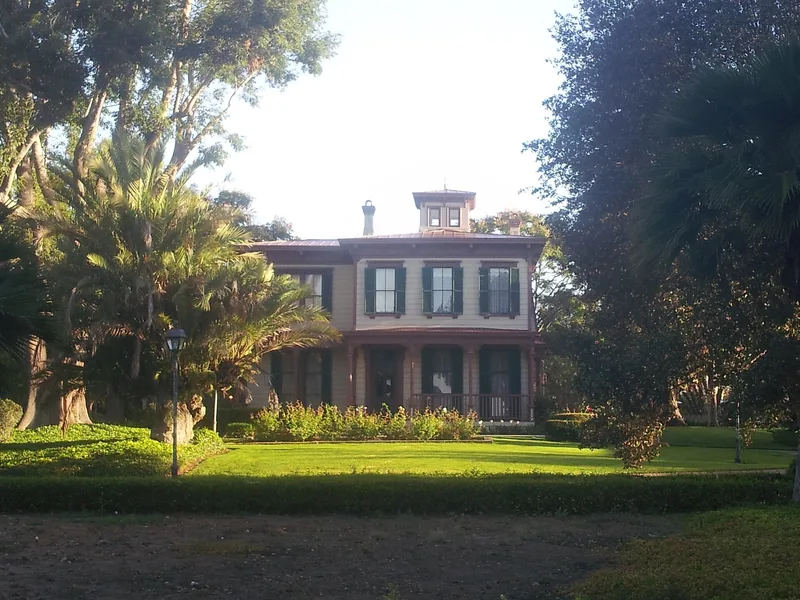
Built in 1880 on Hollister Avenue in old Goleta, this two-story Italianate house was designed by Santa Barbara architect Peter Barber for nurseryman Joseph Sexton and his wife Lucy Foster Sexton. The district covers about 1.5 acres and includes the house, a three-story pump house, concrete landscape features such as a cistern, pool and sundial platform, and a grove of specimen trees associated with the Sexton Nursery. Sexton came to Santa Barbara in 1867 and built a well-known nursery that imported stock from Asia, Australia and Europe. He popularized pampas grass plumes, developed a soft shell walnut that fed a local industry, and tested avocados. The house is one of two rural residences known to be by Barber, who favored ornate bracketed Italianate design. After decades of decline, the house was restored in 1990-91 using historic photographs. The period of significance runs from 1880 to Sexton's death in 1917.
Machine-generated summary. This summary was generated by a language model from the official nomination document and has not been reviewed line by line by an editor. It may contain errors. Check the source document before relying on any detail. Source: nomination document (PDF) · catalog entry. Generated October 2026 (model claude-sonnet-5-5, prompt v1.0-2026-10-29).
| Period of significance | 1880-1917 |
|---|---|
| Styles | Italianate |
| Areas of significance | Agriculture, Architecture |
| Acreage | 1.5 |
| Boundary source | not published |
| Full listing page | Sexton, Joseph and Lucy Foster, House (property record) |
What listing means for this property
This is a historic district. Buildings within its boundary are either contributing (they add to the district's significance) or non-contributing. Owners of contributing income-producing buildings can claim the 20% federal rehabilitation tax credit; homeowners should look at state credits. National Register districts impose no design review by themselves; a local historic district ordinance, if one exists, does (the difference explained).
General information, not legal or tax advice. Rules change; confirm with your State Historic Preservation Office or a qualified adviser.