San Juan Bautista Plaza Historic District

Why it's listed
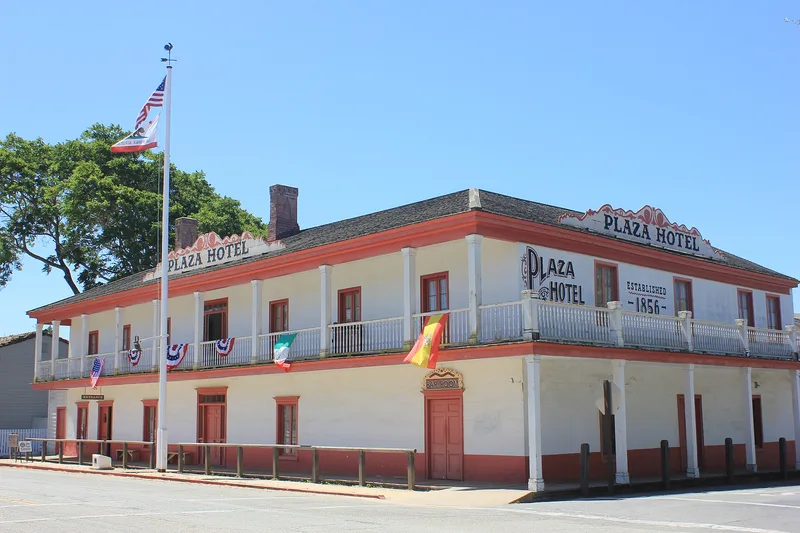
San Juan Bautista's plaza in San Benito County, California, is surrounded by five historic buildings that together preserve a 19th century village laid out on the traditional Spanish-Mexican Colonial plan. The mission, founded in 1797, was secularized in 1835, and the Mexican government made the settlement a pueblo that same year. The plaza began as a parade ground for soldiers guarding the mission. Around it stand the mission church, built 1803-12 and measuring 210 by 77 feet; Plaza Hall, begun in 1815 and rebuilt by Angelo Zanetta; the Plaza Hotel, a former 1813-14 barracks given a second story in 1858; the 1874 Plaza Stable; and the Castro House, a two-story adobe built in 1840-41 by Jose Castro. The buildings have been carefully restored, no modern intrusions mar the setting, and most are open to visitors. Their survival as a group gives the plaza its national significance.
Machine-generated summary. This summary was generated by a language model from the official nomination document and has not been reviewed line by line by an editor. It may contain errors. Check the source document before relying on any detail. Source: nomination document (PDF) · catalog entry. Generated October 2026 (model claude-sonnet-5-5, prompt v1.0-2026-10-29).
| Styles | Spanish-Mexican Colonial Plaza plan; Monterey Colonial (Castro House) |
|---|---|
| Areas of significance | Community Planning and Development, Architecture |
| Boundary source | NPS cultural-resource GIS polygon |
| Full listing page | San Juan Bautista Plaza Historic District (property record) |
What listing means for this property
This is a historic district. Buildings within its boundary are either contributing (they add to the district's significance) or non-contributing. Owners of contributing income-producing buildings can claim the 20% federal rehabilitation tax credit; homeowners should look at state credits. National Register districts impose no design review by themselves; a local historic district ordinance, if one exists, does (the difference explained).
General information, not legal or tax advice. Rules change; confirm with your State Historic Preservation Office or a qualified adviser.