Rockwell Field

Why it's listed
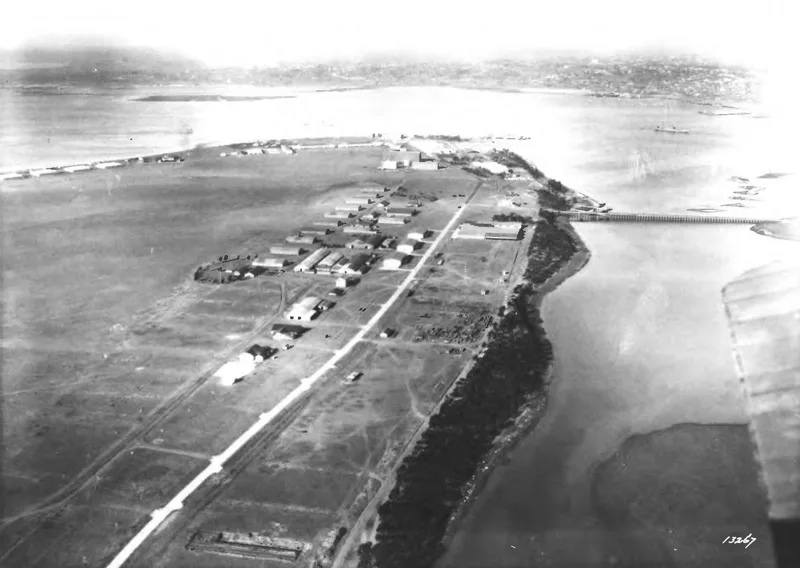
Rockwell Field District occupies the southeastern part of Naval Air Station North Island in San Diego. It preserves the industrial and residential core of the first permanent Army airfield in the United States, which operated on North Island between 1912 and 1935, when the Navy took over. Of 63 buildings, 56 contribute to the district. Most are Mission Revival and Spanish Colonial Revival structures built in concrete, terra cotta and stucco. They follow a 1917 site plan by Detroit industrial architect Albert Kahn, along with housing added after the Emergency Relief Bill of 1932. The listing was revised because an earlier nomination described a landing site tied to the 1924 round-the-world flight, in an area that was actually Navy land, and described none of the real Army buildings. The revised nomination ties significance to the early history of military aviation and to the district's architecture. Despite some alterations, the buildings still convey the character of the field during its Army years.
Machine-generated summary. This summary was generated by a language model from the official nomination document and has not been reviewed line by line by an editor. It may contain errors. Check the source document before relying on any detail. Source: nomination document (PDF) · catalog entry. Generated October 2026 (model claude-sonnet-5-5, prompt v1.0-2026-10-29).
| Styles | Mission/Spanish Colonial Revival |
|---|---|
| Areas of significance | Military, Architecture |
| Acreage | 43.5 |
| Boundary source | NPS cultural-resource GIS polygon |
| Full listing page | Rockwell Field (property record) |
What listing means for this property
This is a historic district. Buildings within its boundary are either contributing (they add to the district's significance) or non-contributing. Owners of contributing income-producing buildings can claim the 20% federal rehabilitation tax credit; homeowners should look at state credits. National Register districts impose no design review by themselves; a local historic district ordinance, if one exists, does (the difference explained).
General information, not legal or tax advice. Rules change; confirm with your State Historic Preservation Office or a qualified adviser.