Rancho De Los Kiotes

Why it's listed
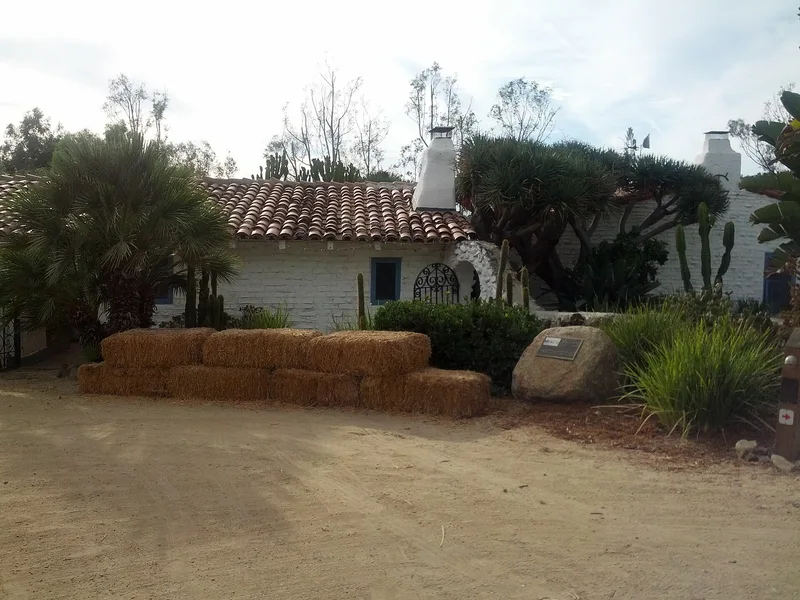
Rancho De Los Kiotes, also called the Leo Carrillo Ranch, is a ten-and-a-half-acre complex of adobe and wood buildings in Carlsbad, California. Actor Leo Carrillo built it between 1937 and 1940 as a weekend retreat and working ranch meant to honor his Hispanic heritage. Carrillo drew up the designs himself, and Cruz Mendoza and his sons of Vista did the construction. The U-shaped main hacienda has thick adobe walls, a clay tile roof and corner beehive-shaped fireplaces. Nearby are a three-level adobe barn, a foreman's house, a cantina, a swimming pool and a small hillside house built for his wife. The ranch once covered 2,538 acres, but only the historic core remains, now owned by the city. The buildings show deterioration but have not been altered. The ranch is significant for its link to Carrillo, a film and television actor and longtime state parks commissioner who promoted California's Spanish past, and for its authentic adobe craftsmanship.
Machine-generated summary. This summary was generated by a language model from the official nomination document and has not been reviewed line by line by an editor. It may contain errors. Check the source document before relying on any detail. Source: nomination document (PDF) · catalog entry. Generated October 2026 (model claude-sonnet-5-5, prompt v1.0-2026-10-29).
| Period of significance | 1936-1941 |
|---|---|
| Styles | Late 19th and 20th Century Revivals: Spanish Revival |
| Areas of significance | Hispanic |
| Acreage | 16.5 |
| Boundary source | NPS cultural-resource GIS polygon |
| Full listing page | Rancho De Los Kiotes (property record) |
What listing means for this property
This is a historic district. Buildings within its boundary are either contributing (they add to the district's significance) or non-contributing. Owners of contributing income-producing buildings can claim the 20% federal rehabilitation tax credit; homeowners should look at state credits. National Register districts impose no design review by themselves; a local historic district ordinance, if one exists, does (the difference explained).
General information, not legal or tax advice. Rules change; confirm with your State Historic Preservation Office or a qualified adviser.