Point Conception Light Station

Why it's listed
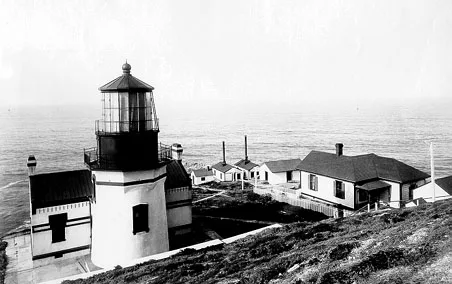
Point Conception Light Station occupies 29.6 acres of windswept headland in Santa Barbara County. The district includes an 1881 white stuccoed brick keeper's dwelling with an attached 52-foot light tower that still uses its original lens, plus a coal house, a 1912 family quarters, a caretaker's residence, garages, a power house, a redwood water tank from 1881, and a fog horn. Mariners nicknamed the point "California's Cape Horn" for its rough waters, and Spanish navigators used it as a landmark. The first lighthouse, built by contractors Francis A. Gibbons and Francis X. Kelly, was finished in 1854 after the tower was rebuilt to meet an inspector's demands. It was first lit in February 1856. Cracking led to its replacement with the present tower, set lower on the point. A survey of the grounds also found 12 archaeological sites, including shell middens up to six feet deep, which add prehistoric significance.
Machine-generated summary. This summary was generated by a language model from the official nomination document and has not been reviewed line by line by an editor. It may contain errors. Check the source document before relying on any detail. Source: nomination document (PDF) · catalog entry. Generated October 2026 (model claude-sonnet-5-5, prompt v1.0-2026-10-29).
| Areas of significance | Prehistoric, Historic - Aboriginal, Transportation |
|---|---|
| Acreage | 29 |
| Boundary source | NPS cultural-resource GIS polygon |
| Full listing page | Point Conception Light Station (property record) |
What listing means for this property
This is a historic district. Buildings within its boundary are either contributing (they add to the district's significance) or non-contributing. Owners of contributing income-producing buildings can claim the 20% federal rehabilitation tax credit; homeowners should look at state credits. National Register districts impose no design review by themselves; a local historic district ordinance, if one exists, does (the difference explained).
General information, not legal or tax advice. Rules change; confirm with your State Historic Preservation Office or a qualified adviser.