Petaluma Historic Commercial District

Why it's listed
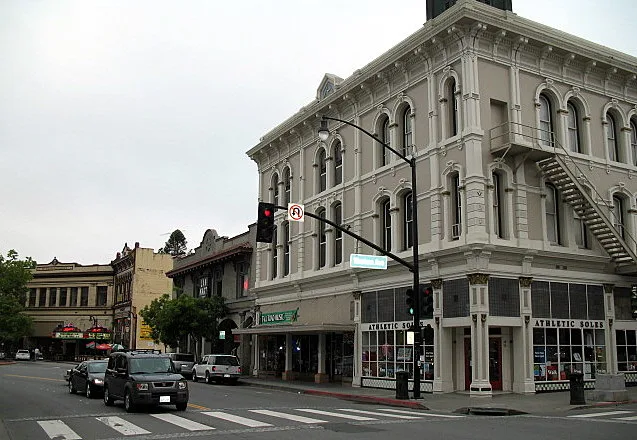
Downtown Petaluma's historic commercial core runs along Petaluma Boulevard and the streets that cross it, bounded on the east by the Petaluma River. The district includes 64 contributing resources, mostly one- to four-story buildings that sit directly on the sidewalk with recessed entrances and display windows. Its best-known feature is a cluster of multi-story, iron-fronted buildings near Petaluma Boulevard and Western Avenue, in Italianate and Second Empire styles, including the Masonic Building, Odd Fellows Hall and Mutual Relief Building. Other styles appear too: Mission Revival, Mediterranean Revival, Streamline Moderne and classically designed bank and post office buildings from the 1920s. Stone and brick warehouses along the river date from about 1854 and now house shops and restaurants. Many storefronts have been altered, yet the upper floors usually keep original materials and design. The district was listed for its role in local commerce and for its architecture between 1854 and 1945, and it retains the feel of a traditional downtown.
Machine-generated summary. This summary was generated by a language model from the official nomination document and has not been reviewed line by line by an editor. It may contain errors. Check the source document before relying on any detail. Source: nomination document (PDF) · catalog entry. Generated October 2026 (model claude-sonnet-5-5, prompt v1.0-2026-10-29).
| Period of significance | 1854-1945 |
|---|---|
| Styles | Late Victorian: Italianate; Late 19th and Early 20th Century Movements: Classical Revival; No Style |
| Areas of significance | Commerce, Architecture |
| Acreage | 17.4 |
| Boundary source | NPS cultural-resource GIS polygon |
| Full listing page | Petaluma Historic Commercial District (property record) |
What listing means for this property
This is a historic district. Buildings within its boundary are either contributing (they add to the district's significance) or non-contributing. Owners of contributing income-producing buildings can claim the 20% federal rehabilitation tax credit; homeowners should look at state credits. National Register districts impose no design review by themselves; a local historic district ordinance, if one exists, does (the difference explained).
General information, not legal or tax advice. Rules change; confirm with your State Historic Preservation Office or a qualified adviser.