Pasadena Civic Center District

Why it's listed
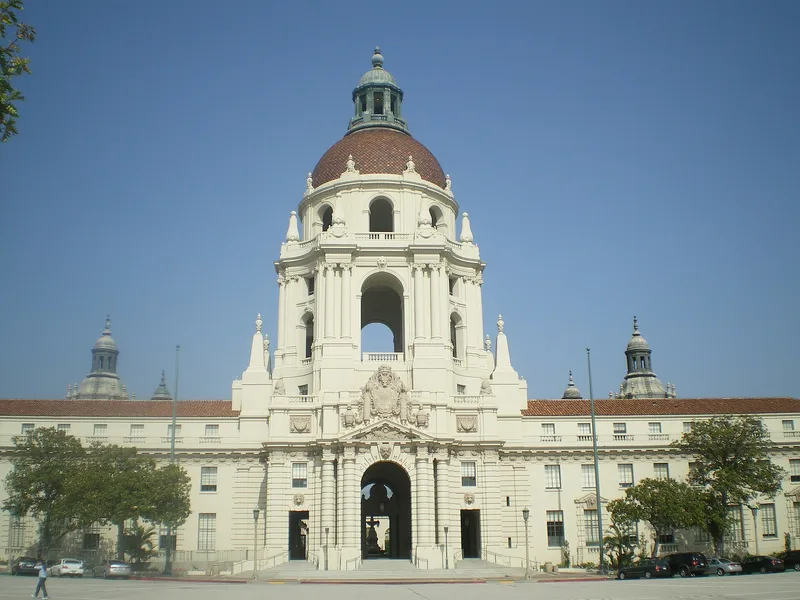
Pasadena Civic Center District covers about 55 acres and was laid out in the 1920s by the firm of Bennett, Parsons and Frost. Its plan uses two crossing axes. City Hall, with its large dome, anchors the main axis along Holly Street. The Public Library and Civic Auditorium end the minor axis, which runs along Garfield Avenue. Lower buildings fill in between, including the Hall of Justice, First Baptist Church, YMCA, YWCA, Post Office, Gas Company and Courthouse. The Pasadena City Planning Commission began the effort in 1922, and Dr. George Ellery Hale invited Edward H. Bennett to prepare the plan, which was published in 1923 and backed by a bond issue. The buildings sit back from the streets, leaving room for carob and magnolia plantings and small parks. The nomination values the district as a rare, largely realized example of City Beautiful design. It also relieved traffic by adding Green and Holly Streets, and it ties the civic buildings to the downtown shopping area.
Machine-generated summary. This summary was generated by a language model from the official nomination document and has not been reviewed line by line by an editor. It may contain errors. Check the source document before relying on any detail. Source: nomination document (PDF) · catalog entry. Generated October 2026 (model claude-sonnet-5-5, prompt v1.0-2026-10-29).
| Styles | City Beautiful civic planning; California Mediterranean idiom, with American Renaissance, Craftsman and English Gothic buildings |
|---|---|
| Areas of significance | Community Planning and Development, Art, Architecture, Social History |
| Acreage | 55 |
| Boundary source | NPS cultural-resource GIS polygon |
| Full listing page | Pasadena Civic Center District (property record) |
What listing means for this property
This is a historic district. Buildings within its boundary are either contributing (they add to the district's significance) or non-contributing. Owners of contributing income-producing buildings can claim the 20% federal rehabilitation tax credit; homeowners should look at state credits. National Register districts impose no design review by themselves; a local historic district ordinance, if one exists, does (the difference explained).
General information, not legal or tax advice. Rules change; confirm with your State Historic Preservation Office or a qualified adviser.