Old Town San Diego Historic District

Why it's listed
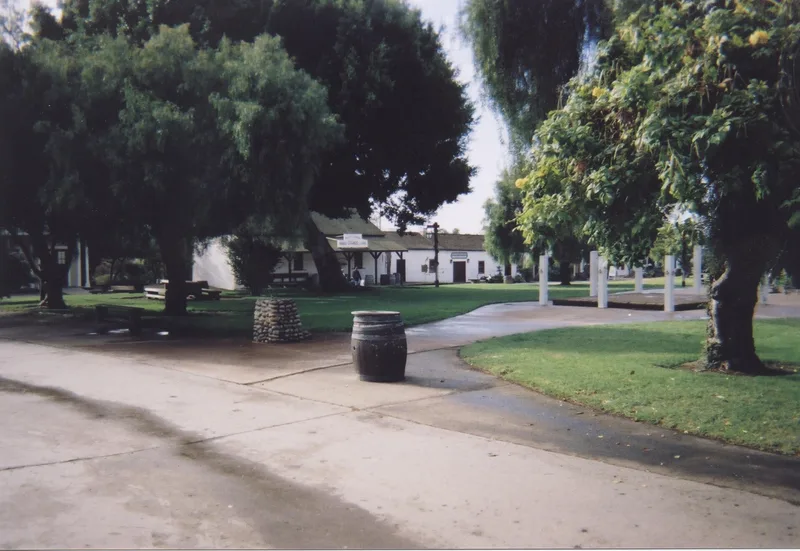
Old Town San Diego preserves the core of Pueblo de San Diego, a community that began in the 1820s when retired soldiers from the nearby presidio built homes below Presidio Hill. The district covers about 16 acres and is owned by the State of California as a historic park and museum. Seven period buildings remain from 1821-1872, among them the adobe homes of Juan Bandini, Jose Antonio Estudillo, Juana Machado de Silvas, Machado-Stewart, and Pedrorena, plus the San Diego Union Office and the Mason Street School. All have been altered, and several were restored or scheduled for restoration around 1969-1971. San Diego served as California's seat of government from 1825 to 1831, and American forces occupied the town on July 9, 1846. Bandini's house served as Commodore Stockton's headquarters that year. The plaza is now a park. State plans call for restoring buildings, reconstructing lost ones and interpreting the Mexican and early American periods.
Machine-generated summary. This summary was generated by a language model from the official nomination document and has not been reviewed line by line by an editor. It may contain errors. Check the source document before relying on any detail. Source: nomination document (PDF) · catalog entry. Generated October 2026 (model claude-sonnet-5-5, prompt v1.0-2026-10-29).
| Period of significance | 19th Century (interpreted period 1821-1872) |
|---|---|
| Areas of significance | Military, Politics/Government, Social History |
| Acreage | 16 |
| Boundary source | NPS cultural-resource GIS polygon |
| Full listing page | Old Town San Diego Historic District (property record) |
What listing means for this property
This is a historic district. Buildings within its boundary are either contributing (they add to the district's significance) or non-contributing. Owners of contributing income-producing buildings can claim the 20% federal rehabilitation tax credit; homeowners should look at state credits. National Register districts impose no design review by themselves; a local historic district ordinance, if one exists, does (the difference explained).
General information, not legal or tax advice. Rules change; confirm with your State Historic Preservation Office or a qualified adviser.