Old Riverview Historic District
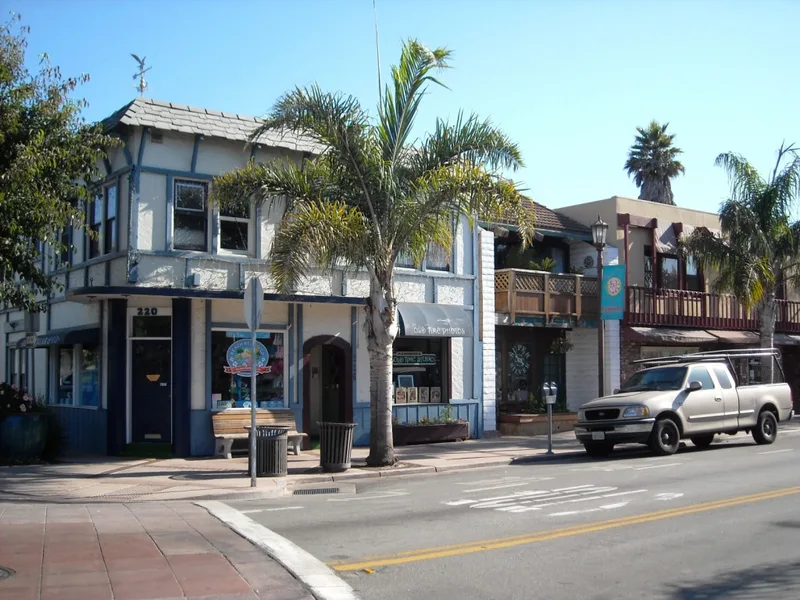

Why it's listed
Along the banks of Soquel Creek in Capitola, this district contains 66 properties, of which 54 contribute to its character. Most are modest one- and two-family wood-frame homes, originally built as summer cottages between about 1925 and 1930. Their styles mix Bungalow, Craftsman and vernacular forms, with several showing Spanish Colonial Revival influence. Low-pitched roofs, exposed rafter ends and simple bargeboards are common. A tall wooden Southern Pacific Railroad trestle rises about 100 feet above the creek and dominates the area. A narrow public walkway follows the creek's eastern bank, and many homes open onto it with porches and gardens. The neighborhood's origins reach back to the early 1890s, when cottages began replacing tent sites at the Capitola resort, and several cottages from the c. 1905 Huana Place development survive. Most buildings remain relatively intact, and newer infill is largely compatible with the beach cottage character, so the district conveys the feel of an early twentieth-century summer colony.
Machine-generated summary. This summary was generated by a language model from the official nomination document and has not been reviewed line by line by an editor. It may contain errors. Check the source document before relying on any detail. Source: nomination document (PDF) · catalog entry. Generated October 2026 (model claude-sonnet-5-5, prompt v1.0-2026-10-29).
| Styles | Bungalow, Craftsman and vernacular, with some Spanish Colonial Revival influence |
|---|---|
| Areas of significance | Entertainment/Recreation, Exploration/Settlement, Architecture |
| Acreage | 13.8 |
| Boundary source | NPS cultural-resource GIS polygon |
| Full listing page | Old Riverview Historic District (property record) |
What listing means for this property
This is a historic district. Buildings within its boundary are either contributing (they add to the district's significance) or non-contributing. Owners of contributing income-producing buildings can claim the 20% federal rehabilitation tax credit; homeowners should look at state credits. National Register districts impose no design review by themselves; a local historic district ordinance, if one exists, does (the difference explained).
General information, not legal or tax advice. Rules change; confirm with your State Historic Preservation Office or a qualified adviser.