North University Park Historic District

Why it's listed
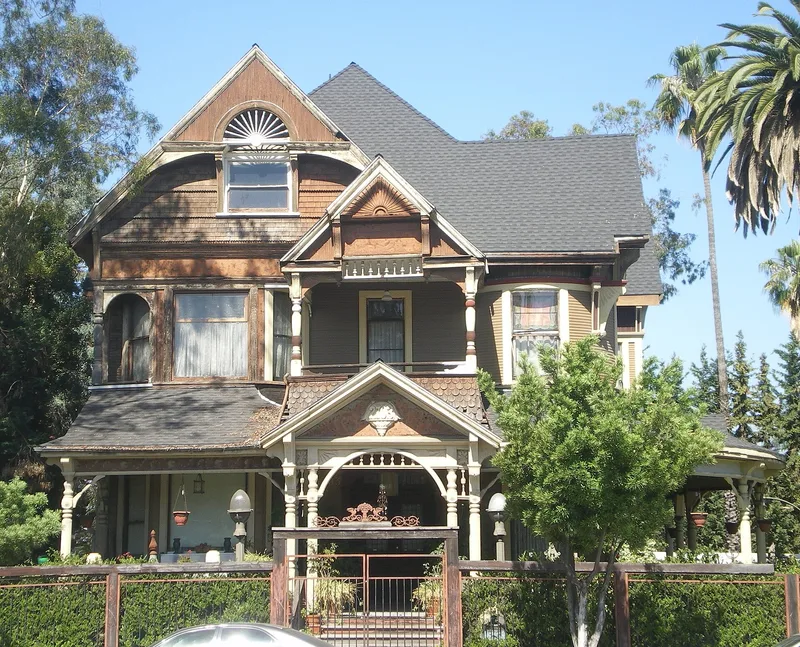
North University Park is a five-block residential neighborhood southwest of downtown Los Angeles, close to the University of Southern California. Built between 1887 and 1929, it holds 66 buildings, mostly one- and two-story houses and apartment buildings, of which 58 contribute to the historic character. Queen Anne houses sit alongside Turn of the Century cottages, American Foursquare houses, English and Mediterranean Revival buildings and Craftsman homes. Several were designed by the firm Bradbeer & Ferris, and a number have been designated Los Angeles Historic-Cultural Monuments. The district holds together because the buildings are similar in scale, follow a common setback and are clad in many of the same materials, including clapboard, shingles and stucco. Three smaller groupings stand out: Vista Magnolia Court, the English Revival apartments on West Adams Gardens, and the Foursquare houses on Magnolia Avenue. Mature Canary Island date palms, a large Moreton Bay fig and diamond-scored sidewalks survive as historic landscape features.
Machine-generated summary. This summary was generated by a language model from the official nomination document and has not been reviewed line by line by an editor. It may contain errors. Check the source document before relying on any detail. Source: nomination document (PDF) · catalog entry. Generated October 2026 (model claude-sonnet-5-5, prompt v1.0-2026-10-29).
| Period of significance | 1887-1929 |
|---|---|
| Styles | Late Victorian (Queen Anne, Eastlake); Late 19th & 20th Century Revivals (Spanish Colonial Revival, Tudor Revival); Craftsman |
| Areas of significance | Architecture |
| Acreage | 15.7 |
| Boundary source | NPS cultural-resource GIS polygon |
| Full listing page | North University Park Historic District (property record) |
What listing means for this property
This is a historic district. Buildings within its boundary are either contributing (they add to the district's significance) or non-contributing. Owners of contributing income-producing buildings can claim the 20% federal rehabilitation tax credit; homeowners should look at state credits. National Register districts impose no design review by themselves; a local historic district ordinance, if one exists, does (the difference explained).
General information, not legal or tax advice. Rules change; confirm with your State Historic Preservation Office or a qualified adviser.