Miller-Melone Ranch

The National Park Service has not published a boundary polygon for this district; the map shows the listed properties inside it and the district's reference point.
Why it's listed
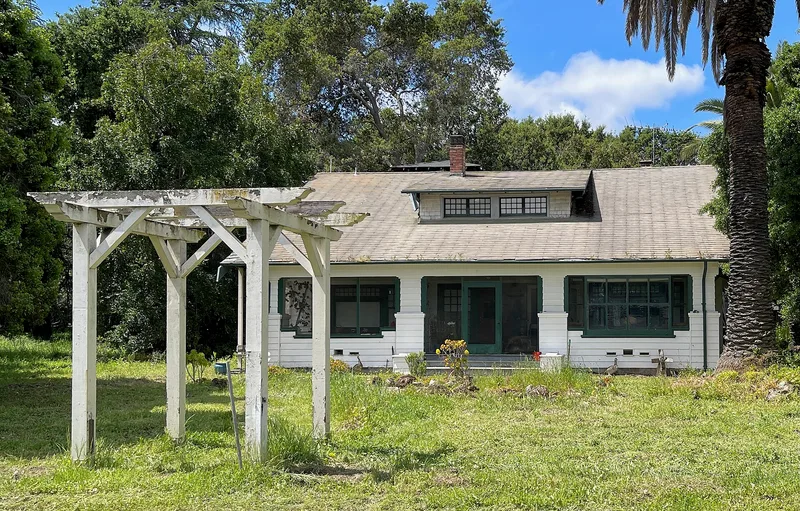
This 2.4-acre remnant of a prune ranch in Saratoga, California, centers on a 1½-story Craftsman house built in 1910-11 to designs by San Jose architect F.D. Wolfe. Clapboard and shingle walls, a full-width front porch, matching bays and multi-pane windows define the exterior, while the interior retains cypress woodwork, tile, built-in cabinetry and original plumbing fixtures. A garage, a three-story tank house, a windmill, a fuel oil container and an old service station gas pump complete the complex; a barn was removed in 1987. Charlie Miller and his family lived here from 1911 to 1986, through the rise and decline of fruit ranching in the Santa Clara Valley. The land came from the Melone family, who settled in Saratoga in the 1880s. The ranch is considered significant as the only local ranch devoted exclusively to prunes with its outbuildings intact, and as a well-preserved example of Craftsman design.
Machine-generated summary. This summary was generated by a language model from the official nomination document and has not been reviewed line by line by an editor. It may contain errors. Check the source document before relying on any detail. Source: nomination document (PDF) · catalog entry. Generated October 2026 (model claude-sonnet-5-5, prompt v1.0-2026-10-29).
| Period of significance | 1911-40 |
|---|---|
| Styles | Bungalow/Craftsman |
| Areas of significance | Agriculture, Architecture |
| Acreage | 2.4 |
| Boundary source | not published |
| Full listing page | Miller-Melone Ranch (property record) |
What listing means for this property
This is a historic district. Buildings within its boundary are either contributing (they add to the district's significance) or non-contributing. Owners of contributing income-producing buildings can claim the 20% federal rehabilitation tax credit; homeowners should look at state credits. National Register districts impose no design review by themselves; a local historic district ordinance, if one exists, does (the difference explained).
General information, not legal or tax advice. Rules change; confirm with your State Historic Preservation Office or a qualified adviser.