Mill Creek Zanja

Why it's listed
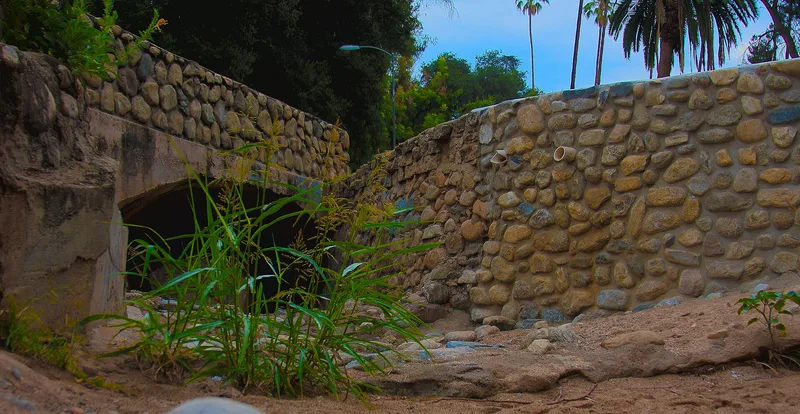
Mill Creek Zanja is a six-mile ditch that carries water from an intake weir box in Mentone southwest through Crafton to Sylvan Park in Redlands. Franciscan fathers from Mission San Gabriel began planning it in 1819 to teach farming to the Gauchama Indians. Pedro Alvarez laid out the route, and Gauchama workers under their chief, Solano, did the digging. It was finished in time for spring planting in 1820. The route follows natural draws and depressions, with excavation where the ground rose. The ditch later served Mexican-era colonists and early American settlers, and for years it was the only water supply in early Redlands. Its water rights prompted twelve major lawsuits, including one in 1876 that held the Zanja to be a man-made stream. The nomination describes it as the oldest civil engineering project in Southern California and a California Historical Landmark. Parts still flow, and many trees planted along its banks survive. A flood-control channel has altered a short stretch near Lincoln Street.
Machine-generated summary. This summary was generated by a language model from the official nomination document and has not been reviewed line by line by an editor. It may contain errors. Check the source document before relying on any detail. Source: nomination document (PDF) · catalog entry. Generated October 2026 (model claude-sonnet-5-5, prompt v1.0-2026-10-29).
| Period of significance | 1819-1920 |
|---|---|
| Areas of significance | Agriculture, Engineering, Social History |
| Acreage | 15 |
| Boundary source | NPS cultural-resource GIS polygon |
| Full listing page | Mill Creek Zanja (property record) |
What listing means for this property
This is a historic district. Buildings within its boundary are either contributing (they add to the district's significance) or non-contributing. Owners of contributing income-producing buildings can claim the 20% federal rehabilitation tax credit; homeowners should look at state credits. National Register districts impose no design review by themselves; a local historic district ordinance, if one exists, does (the difference explained).
General information, not legal or tax advice. Rules change; confirm with your State Historic Preservation Office or a qualified adviser.