McCrea, Joel, Ranch

Why it's listed
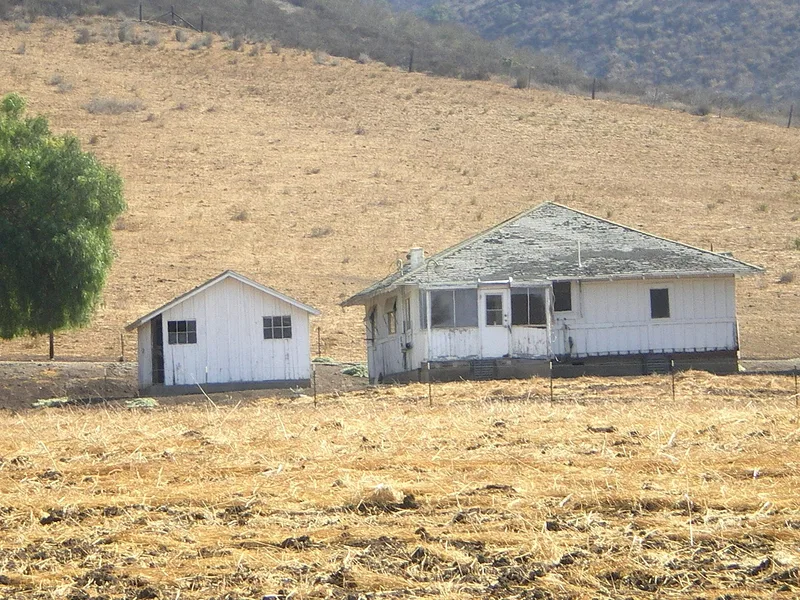
This 220-acre former cattle ranch lies at the northern edge of Thousand Oaks, in a narrow valley at the eastern end of the Santa Rosa Valley. Working buildings sit near Moorpark Road, while a private road leads to the main house and maid's residence set against the hillside. Joel McCrea, a Hollywood star whose career spanned more than forty years and over eighty films, bought the property in 1933 and made it his primary residence until his death in 1990. He built the ranch house for his bride, Frances Dee, along with two barns, a shop, a milk house, corrals and a pool. The oldest building is a bunkhouse from about 1890, built by Belgian settler August Dumortier. Architect John Byers, known for adobe and Spanish Colonial Revival work, designed the main house in the informal California Ranch style. The ranch also survives as a rare example of the cattle ranching that once dominated the Conejo Valley before suburban growth.
Machine-generated summary. This summary was generated by a language model from the official nomination document and has not been reviewed line by line by an editor. It may contain errors. Check the source document before relying on any detail. Source: nomination document (PDF) · catalog entry. Generated October 2026 (model claude-sonnet-5-5, prompt v1.0-2026-10-29).
| Period of significance | 1933-1947 |
|---|---|
| Styles | Other: Ranch Style |
| Areas of significance | Architecture, Entertainment/Recreation |
| Acreage | 220 |
| Boundary source | NPS cultural-resource GIS polygon |
| Full listing page | McCrea, Joel, Ranch (property record) |
What listing means for this property
This is a historic district. Buildings within its boundary are either contributing (they add to the district's significance) or non-contributing. Owners of contributing income-producing buildings can claim the 20% federal rehabilitation tax credit; homeowners should look at state credits. National Register districts impose no design review by themselves; a local historic district ordinance, if one exists, does (the difference explained).
General information, not legal or tax advice. Rules change; confirm with your State Historic Preservation Office or a qualified adviser.