Malakoff Diggins-North Bloomfield Historic District

Why it's listed
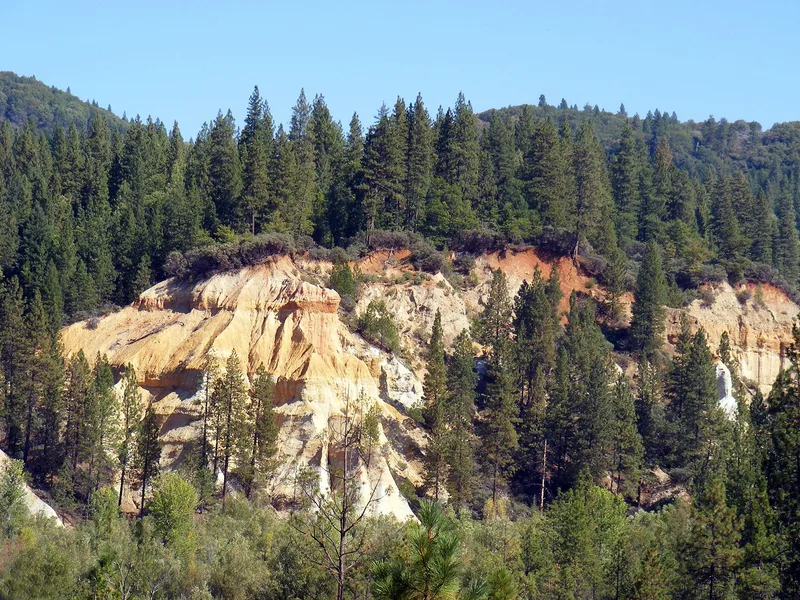
North Bloomfield and the adjoining Malakoff Diggins in Nevada County, California, form an 865-acre district that combines a surviving gold-mining town with the scarred landscape of hydraulic mining. The town began as a camp called Humbug in the early 1850s, was renamed Bloomfield and then North Bloomfield, and reached a peak population of 1,200 to 1,800 around 1880. Its wood-frame stores, houses, a livery stable, school, church and barn show the plain, high-roofed construction typical of the California gold regions. Among them is the 1852 McKillian and Mobley store, now a house museum furnished as an 1880s general store. Beyond town, cliffs up to 600 feet high remain from hydraulic operations that ran from 1866 to 1884, when anti-debris laws and the Sawyer decision ended the practice. By 1972 only about nine people lived in the town, and the area is now managed as a state historic park.
Machine-generated summary. This summary was generated by a language model from the official nomination document and has not been reviewed line by line by an editor. It may contain errors. Check the source document before relying on any detail. Source: nomination document (PDF) · catalog entry. Generated October 2026 (model claude-sonnet-5-5, prompt v1.0-2026-10-29).
| Styles | Simple frame vernacular buildings typical of California gold-region towns (board and batten, clapboard, channel rustic, little decoration) |
|---|---|
| Areas of significance | Industry, Commerce, Architecture, Social History |
| Acreage | 865 |
| Boundary source | NPS cultural-resource GIS polygon |
| Full listing page | Malakoff Diggins-North Bloomfield Historic District (property record) |
What listing means for this property
This is a historic district. Buildings within its boundary are either contributing (they add to the district's significance) or non-contributing. Owners of contributing income-producing buildings can claim the 20% federal rehabilitation tax credit; homeowners should look at state credits. National Register districts impose no design review by themselves; a local historic district ordinance, if one exists, does (the difference explained).
General information, not legal or tax advice. Rules change; confirm with your State Historic Preservation Office or a qualified adviser.