Madrona Knoll Rancho District

The National Park Service has not published a boundary polygon for this district; the map shows the listed properties inside it and the district's reference point.
Why it's listed
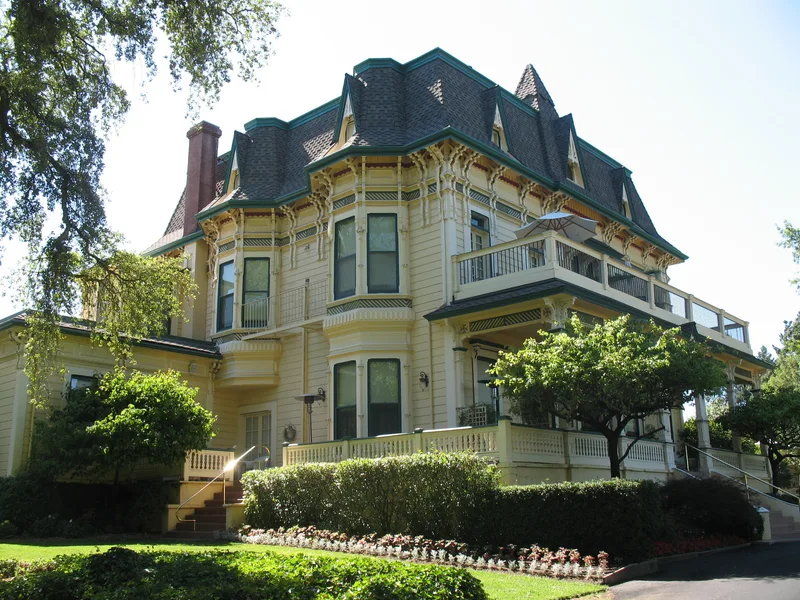
Perched on a knoll overlooking the Dry Creek Valley west of Healdsburg, this 7.92-acre rancho holds seven structures that trace a shift from frontier homestead to showpiece estate. The oldest is a one-and-one-half story Greek Revival farmhouse, believed built in 1862 by the Hooten family. In 1880 the capitalist John A. Paxton added a three-story mansion, a two-story carriage house and a pantry outbuilding, all built by Santa Rosa builder Thomas J. Ludwig. The mansion combines a Second Empire mansard roof with Stick style belt courses, Gothic Revival dormers and Eastlake trim, and it contains ten fireplaces, tiled floors and ornate brass hardware. The carriage house echoes these details. A schoolhouse is counted as a contributor, while a shed and a relocated cottage are non-contributors. Mature native trees fill the landscaped grounds. The district was recognized for its architecture and for illustrating how wealthy San Franciscans invested in Sonoma County in the 1880s.
Machine-generated summary. This summary was generated by a language model from the official nomination document and has not been reviewed line by line by an editor. It may contain errors. Check the source document before relying on any detail. Source: nomination document (PDF) · catalog entry. Generated October 2026 (model claude-sonnet-5-5, prompt v1.0-2026-10-29).
| Styles | Second Empire / Stick style (mansion, eclectic); Greek Revival (original 1862 dwelling) |
|---|---|
| Areas of significance | Commerce, Exploration/Settlement, Architecture |
| Acreage | 7.9 |
| Boundary source | not published |
| Full listing page | Madrona Knoll Rancho District (property record) |
What listing means for this property
This is a historic district. Buildings within its boundary are either contributing (they add to the district's significance) or non-contributing. Owners of contributing income-producing buildings can claim the 20% federal rehabilitation tax credit; homeowners should look at state credits. National Register districts impose no design review by themselves; a local historic district ordinance, if one exists, does (the difference explained).
General information, not legal or tax advice. Rules change; confirm with your State Historic Preservation Office or a qualified adviser.